1. The four MAIN causes
0:006:36
Humanities

Why Did World War I Actually Start?

It wasn't just an assassination. Alliances, imperialism, nationalism, and miscalculation — how Europe sleepwalked into catastrophe.

Apr 22, 20267 min listen5 chapters
What you'll learn
  • The four M-A-I-N causes: militarism, alliances, imperialism, nationalism
  • How the assassination of Franz Ferdinand triggered a chain reaction
  • The 'sleepwalkers' thesis: miscalculation vs. deliberate aggression
  • Why understanding WWI matters for geopolitics today

1. The four MAIN causes

note

Why Did World War I Actually Start?

It wasn't just an assassination. Alliances, imperialism, nationalism, and miscalculation — how Europe sleepwalked into catastrophe.

note

The four MAIN causes of World War I

M-A-I-N is a useful shortcut, but each letter names a real force.

Militarism: states prepared for war as if it were normal policy. Germany’s army was the strongest on the continent, and Britain and Germany entered an expensive naval race after 1906.

Alliances: countries promised support to allies. These were meant to deter war, but they also widened any local crisis.

Imperialism: empires competed for territory, trade, and prestige. Rivalry in Morocco and the Balkans sharpened suspicion.

Nationalism: people identified fiercely with nations, ethnic groups, or imperial projects. In the Balkans, Serbian nationalism directly challenged Austro-Hungarian rule.

Think of Europe as a table with four legs. Remove one and it may wobble. Remove all four and the table collapses fast.

diagram
chart · bar
Selected military spending before 1914
Britain 1908Britain 1913Germany 1908Germany 1913

2. Sarajevo and the July Crisis

diagram
note

The July Crisis, step by step

June 28, 1914: Franz Ferdinand is assassinated in Sarajevo.

July 5 to 6: Germany gives Austria-Hungary the blank cheque.

July 23: Austria-Hungary sends Serbia its ultimatum.

July 28: Austria-Hungary declares war on Serbia.

July 30: Russia orders general mobilization.

August 1: Germany declares war on Russia.

August 3: Germany declares war on France.

August 4: Germany invades Belgium, and Britain enters the war.

This was not one decision. It was a chain of decisions, each one narrowing the exit.
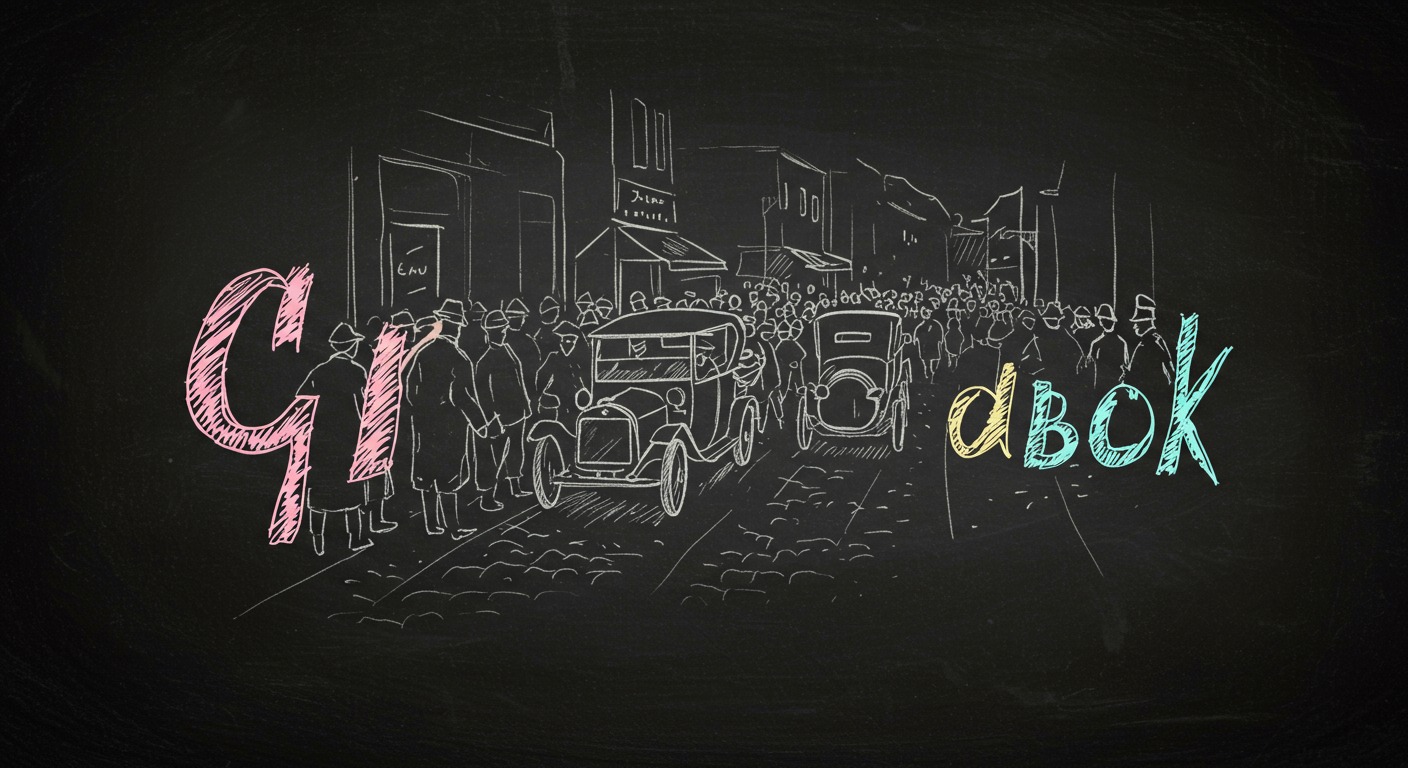
illustration
A crowded street in Sarajevo in 1914 with Archduke Franz Ferdinand's car, tense bystanders, and the moment of the assassination

3. Why the crisis spread so fast

diagram
note

Why mobilization mattered

Mobilization meant calling up reserves, moving troops, and putting war plans into motion.

In 1914, that was not reversible with a phone call.

Germany’s Schlieffen Plan assumed France could be defeated in about six weeks. That timetable made speed feel like survival.

Russia’s rail system was less developed, so Russian planners wanted to mobilize early.

When both sides believed delay was dangerous, delay itself became dangerous.

That is how strategy can become a trap.

equation
P(war)=P(crisis)×P(escalationcrisis)×P(failed diplomacy)P(\text{war}) = P(\text{crisis}) \times P(\text{escalation} \mid \text{crisis}) \times P(\text{failed diplomacy})

4. The sleepwalkers debate

note

The sleepwalkers thesis

Christopher Clark argued in The Sleepwalkers, published in 2012, that the road to war was driven by multiple actors, not one all-powerful villain.

That view shifted attention from simple blame to shared miscalculation.

But shared miscalculation is not the same as innocence.

Austria-Hungary, Germany, Russia, France, and Britain all made choices that narrowed the path to peace.

A good test is this: if every leader thinks the other side will blink first, who actually blinks?

In 1914, almost nobody did.

diagram
chart · pie
Shared pressures in 1914
AlliancesMilitarismImperialismNationalism

5. Why WWI still matters

note

Why WWI matters for geopolitics today

World War I is a case study in escalation.

It shows how alliances can deter war and also spread it.

It shows how military plans can make leaders less flexible.

It shows how nationalism can turn compromise into humiliation.

It shows why the first crisis is often less dangerous than the second decision made during the crisis.

The war killed more than 16 million people and destroyed four empires.

That is why the subject still belongs in any serious discussion of international politics.

diagram
note

Key takeaway

World War I started because Europe entered 1914 with rival empires, armed alliances, intense nationalism, and leaders who misjudged how fast a crisis could spread.

Sarajevo lit the match.

The room had been prepared for fire long before that.

Transcript

Welcome to Slate. Today we're looking at Why Did World War I Actually Start?. We'll cover The four M-A-I-N causes: militarism, alliances, imperialism, nationalism, How the assassination of Franz Ferdinand triggered a chain reaction, The 'sleepwalkers' thesis: miscalculation vs. deliberate aggression, and Why understanding WWI matters for geopolitics today. Let's get into it.

World War I did not begin with one gunshot. It began with a Europe that had been loading the chamber for years. Historians often use the shorthand M-A-I-N: militarism, alliances, imperialism, and nationalism. Think of them as four dry logs in the same fireplace. A spark matters, but only if the wood is already stacked and dry. Militarism meant armies and navies kept growing. By 1914, Germany had built a battle fleet to challenge Britain, and Britain responded with its own naval expansion. Alliances tied states together like a row of dominoes. Imperialism pushed rival empires into Africa, Asia, and the Balkans. Nationalism made people believe their nation deserved power, territory, and honor. In the Balkans, that was especially explosive because Serbs, Croats, Bosnians, and others lived inside or near empires that did not match their national dreams. The point is not that Europe was doomed. It is that leaders kept making the system more brittle. When a crisis came, it would not bend; it would snap. That is why the assassination in Sarajevo mattered so much. It happened in a room already full of gasoline.

On June 28, 1914, Gavrilo Princip, a Bosnian Serb nationalist, shot Archduke Franz Ferdinand in Sarajevo. Franz Ferdinand was the heir to the Austro-Hungarian throne, not the emperor himself, but he was important enough to shake the empire. The assassination was not the war. It was the first domino. Austria-Hungary saw a chance to punish Serbia. Germany gave Vienna what became known as the blank cheque on July 5 and 6, 1914, meaning strong support even if war followed. Austria-Hungary then sent Serbia an ultimatum on July 23 with demands that were designed to be hard to accept. Serbia accepted most of it, but not all. That was enough for Vienna to declare war on July 28. Then the alliance system did what it had been built to do, and what it had also been built to prevent. Russia mobilized to protect Serbia. Germany mobilized against Russia and France. Germany invaded Belgium on August 4, bringing Britain into the war. In a little more than five weeks, a Balkan assassination became a continental war. The speed matters. Leaders were not sitting calmly at a chessboard. They were moving under pressure, with rail timetables, mobilization plans, and fear of appearing weak.

The war spread because the great powers had built systems that rewarded speed and punished hesitation. Mobilization was not just a political statement. It was a logistical machine. Once an army started moving, it was hard to stop. Railways had fixed schedules, and war plans depended on them. Germany’s Schlieffen Plan assumed a quick strike through Belgium to defeat France before turning east against Russia. Russia’s generals feared that if they waited, Germany and Austria-Hungary would gain the advantage. France was bound by alliance to Russia. Britain had no formal treaty forcing entry, but the German invasion of neutral Belgium made neutrality impossible to defend politically. This is the tragedy of optimization. Each country tried to make its own war plan efficient. Together, those plans made the whole system less safe. A useful analogy is a set of fire doors in a building. Every door is designed to protect one room, but if every door locks automatically at once, people can get trapped inside the building. Europe had built a structure that made local crises hard to contain. Once the crisis started, the machinery of mobilization took over from diplomacy.

Christopher Clark’s 2012 book The Sleepwalkers changed the conversation by arguing that no single country planned a general European war from the start. Instead, leaders stumbled into catastrophe through fear, pride, and bad judgment. That does not mean everyone was innocent. It means responsibility was shared in a messy way. Austria-Hungary wanted to crush Serbia’s challenge. Germany backed Vienna because its leaders feared encirclement by Russia and France. Russia mobilized to defend Serbia and to protect its own status in the Balkans. France supported Russia because the Franco-Russian alliance was the core of its security. Britain entered after Belgium was invaded and because German power on the Channel coast threatened the balance of power. The sleepwalkers thesis is strongest when it explains how ordinary diplomatic habits turned lethal. Leaders assumed the other side would back down. They assumed war would be short. They assumed mobilization would force negotiation. They were wrong on all three counts. That is the lesson: catastrophe does not always require a master plan. Sometimes it requires several governments making smaller, confident mistakes at the same time.

World War I matters because it shows how alliances, deterrence, and misreading an opponent can turn a local crisis into a system-wide war. That problem did not disappear in 1918. It returned in different forms in the Cold War, in regional conflicts, and in today’s debates about security guarantees. The war also remade the modern world. The Ottoman, Russian, German, and Austro-Hungarian empires collapsed. The Russian Revolution of 1917 helped create the Soviet Union. The Treaty of Versailles in 1919 redrew borders and planted grievances that shaped the next generation. More than 16 million people died, including roughly 9 to 10 million military dead and millions more civilians. Those numbers are not abstract. They are the scale of what happens when states treat escalation as manageable. The visual on the screen should make one point clear: the assassination was the spark, but the fuel was already there. If you want to understand geopolitics today, start here. Ask who is tied to whom, what each side fears, and which small move could make everyone think they have no safe way back.

XLinkedInWhatsApp

Keep going with Slate

Pick up where this left off in your own voice session.

Built with Slate