1. The three classic answers to free will
0:006:53
Humanities

What Is Free Will? The Debate That Won't Die

Neuroscience says your brain decides before 'you' do. Philosophy asks: does that mean free will is an illusion?

Apr 22, 20267 min listen5 chapters
What you'll learn
  • The classical debate: determinism, libertarianism, compatibilism
  • Libet's experiment and what neuroscience says about choice
  • Why the question matters for morality, law, and punishment
  • Modern compatibilism: redefining free will for the 21st century

1. The three classic answers to free will

note

What Is Free Will? The Debate That Won't Die

Neuroscience says your brain decides before 'you' do. Philosophy asks: does that mean free will is an illusion?

note

The classical free will debate

Determinism says that every event has sufficient prior causes. If the state of the world at one moment and the laws of nature are fixed, then only one future is possible.

Libertarian free will is a philosophical view, not a political one. It says some human choices are genuinely open alternatives, and not fully fixed by prior causes.

Compatibilism says free will and determinism can both be true. On this view, a choice is free when it comes from the agent’s own reasons, values, and deliberation, even if those mental states themselves have causes.

The real disagreement

The argument is not just about causation. It is about control.

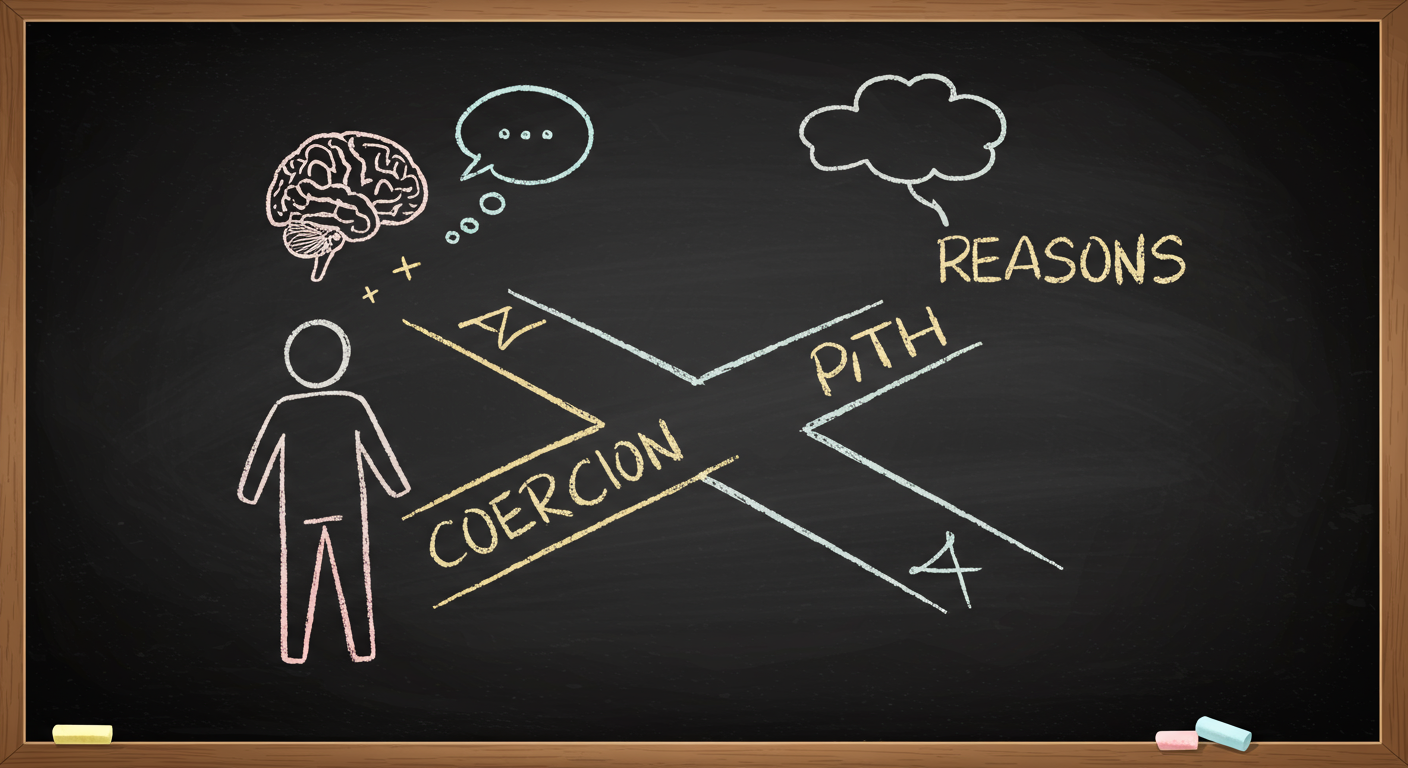
If my action is caused by my own beliefs and desires, many compatibilists say that is enough. If an action is caused by forces outside me, like coercion or a seizure, then it is not free.

A useful distinction

A person can be caused without being forced.

That distinction matters in almost every later chapter of the debate.

diagram
note

Three positions in one sentence each

Determinism: the past plus the laws fix the future.

Libertarianism: at least some choices are not fixed in that way.

Compatibilism: what matters is whether the choice expresses the person’s own deliberation and character.

note

Why this debate survives

Because each view answers a different human worry.

Determinism explains predictability. Libertarianism protects a strong sense of responsibility. Compatibilism tries to preserve both responsibility and a scientific picture of nature.

2. Libet and the brain before awareness

note

Libet’s 1983 experiment

Benjamin Libet asked participants to make a quick wrist or finger movement whenever they chose.

He measured two things:

  • the readiness potential, a brain signal that rose before movement
  • the reported moment of conscious intention

The readiness potential began roughly 550 milliseconds before movement. Reported awareness came about 200 milliseconds before movement.

What people concluded

A popular reading was: the brain decides first, consciousness notices later.

That is too simple.

The task was very small and artificial. It was not a decision between competing reasons, like whether to lie, spend money, or move to another country.

Why timing is tricky

Introspection is not a stopwatch.

Pinpointing the moment a decision forms is difficult because intention builds gradually, not like a light switch.

diagram
note

What the experiment does and does not show

It suggests that some neural preparation happens before conscious awareness.

It does not show that all decisions are predetermined.

It does not show that conscious thought is useless.

It does not test moral responsibility in real-world situations.

note

A modern caution

A single lab task cannot settle a centuries-old metaphysical question.

At most, it tells us that the story we tell ourselves about deciding may be simpler than the brain’s actual machinery.

3. Why free will matters for blame, law, and punishment

note

Why the debate matters

Free will is not just a classroom puzzle. It shapes punishment, guilt, rehabilitation, and forgiveness.

If a person could not understand reasons or control behavior, blame becomes harder to justify.

Law already distinguishes kinds of control

Courts often care about whether someone:

  • understood the act
  • could tell right from wrong
  • acted under coercion
  • had a condition that seriously impaired control

That is why insanity defenses, duress, and diminished capacity matter.

Moral responsibility is not all or nothing

People can be more or less responsible depending on the situation.

A coerced confession is not treated the same as a deliberate lie.

chart · bar
How law treats different levels of control
Normal deliberationStrong temptationAddictionSevere psychosisCoercion
diagram
note

The hard balance

Too much determinism can make people sound like machines. Too much libertarianism can make responsibility depend on a mysterious power no one can explain.

Modern law usually tries for a middle path: hold people responsible when they can understand and respond to reasons, and soften judgment when they cannot.

4. Modern compatibilism and what freedom means now

note

Modern compatibilism

Compatibilists redefine free will in terms of reasons, self-control, and ownership of action.

The question becomes: did the action come from the agent’s values and deliberation, without coercion or severe impairment?

Frankfurt’s challenge

In 1969, philosopher Harry Frankfurt argued that moral responsibility may not require genuine alternative possibilities in every case.

If a person would have chosen the same way anyway, but did so from their own reasons, they may still be responsible.

Dennett’s angle

Daniel Dennett argues that free will is a real human capacity built from planning, learning, and self-correction.

That capacity lets us anticipate consequences and reshape behavior over time.
illustration
A person at a crossroads with one path labeled coercion and another path labeled reasons, with a brain and thought bubbles above the figure
diagram
note

Why this view is attractive

It fits everyday life.

We already distinguish between a choice made calmly after reflection and a choice made under threat, panic, or intoxication.

Compatibilism says that distinction is the heart of free will.

5. Where the debate stands now

note

What neuroscience has changed

Neuroscience has made it harder to imagine consciousness as the only driver of action.

It has not eliminated the need for a theory of responsibility.

The current center of gravity

Many philosophers now focus on:

  • self-control
  • responsiveness to reasons
  • the ability to reflect and revise
  • freedom from coercion and severe impairment

The big takeaway

The debate is no longer just “free will or no free will.”

It is about what kind of freedom humans actually have, and what kind of responsibility that freedom can support.

diagram
note

Key terms to remember

Determinism: the future is fixed by prior causes and laws.

Libertarianism: some choices are not fully determined.

Compatibilism: free will is acting from one’s own reasons and character.

Libet experiment: a 1983 study suggesting neural preparation can precede conscious awareness.

Final idea

The strongest modern question is not whether the brain causes choice. It does.

The question is whether a person, with a brain, can still be the kind of cause that matters for responsibility.

Transcript

Welcome to Slate. Today we're looking at What Is Free Will? The Debate That Won't Die. We'll cover The classical debate: determinism, libertarianism, compatibilism, Libet's experiment and what neuroscience says about choice, Why the question matters for morality, law, and punishment, and Modern compatibilism: redefining free will for the 21st century. Let's get into it.

Free will sounds simple until you try to define it. The classic debate starts with one hard question: if the universe follows causes, can a person truly choose? Determinism says every event has prior causes. On that view, your decision to raise a hand is the last domino in a long chain. Libertarianism, in philosophy, says at least some choices are not fully determined by prior events. Compatibilism says freedom and causation can coexist. Think of it like a river. Determinism says the current shapes where you can go. Libertarianism says you can sometimes steer outside the current. Compatibilism says steering can still count as freedom, even if the water is flowing. The key disagreement is not whether causes exist. It is what kind of control matters. Do you need to be an uncaused cause, or is acting from your own reasons enough? That question has been alive since ancient philosophy, and it still structures almost every modern discussion of free will. Here’s the map we need before we talk about brains, because neuroscience does not settle the debate by itself. It only changes what each side has to explain.

In 1983, Benjamin Libet published a famous experiment in the journal Brain. Participants watched a clock and made a simple spontaneous finger movement whenever they wanted. Libet measured a brain signal called the readiness potential, which appeared about 550 milliseconds before the movement. The participants’ reported awareness of the intention came later, about 200 milliseconds before the movement. The headline sounded dramatic: the brain seemed to start the action before the person became aware of deciding. But the experiment was not a direct test of free will. It studied a trivial movement, not a real-life choice like telling the truth or quitting a job. And the timing reports were noisy, because asking people to pinpoint the exact moment of an inner intention is a bit like asking them to name the exact second a wave begins. More recent work has complicated the picture. In 2011, Aaron Schurger and colleagues proposed that the readiness potential may reflect a buildup of random neural activity that crosses a threshold, not a hidden decision made long before awareness. So neuroscience shows something important: conscious awareness may not be the first step in every action. But that does not automatically prove that free will is an illusion. It means the brain is doing more of the work, earlier, than our introspection suggests.

The free will debate matters because societies punish, praise, excuse, and forgive. If nobody ever chose otherwise, what justifies blame? One answer is that responsibility requires moral control, not magical independence from causation. Law already works with that idea. A person who acts under duress, severe psychosis, or a seizure is often treated differently from someone who plans a crime. The legal system asks whether the person understood what they were doing and could respond to reasons. That is closer to compatibilism than to the image of a soul floating above the brain. The practical stakes are high. In the United States, more than 1.9 million people are held in state and federal prisons and local jails combined, according to Bureau of Justice Statistics counts in the early 2020s. So the theory of responsibility affects real lives at scale. Neuroscience can also change how we judge people. If a tumor, dementia, or addiction strongly distorts control, we often shift from pure blame toward treatment and prevention. But if we treat every harmful act as mere mechanical output, we risk erasing agency altogether. The challenge is to keep responsibility without pretending people are uncaused.

Modern compatibilists think the old question is often framed too sharply. They do not ask, “Did your choice come from nowhere?” They ask, “Did it come from you in the right way?” Harry Frankfurt’s famous 1969 paper argued that moral responsibility does not require the ability to do otherwise in every case. What matters is whether the action flowed from the person’s own motives, not from external compulsion. Think of a jazz improvisation. The notes are shaped by training, memory, and the structure of the song. Yet the solo still belongs to the musician. That is the compatibilist idea of freedom. Contemporary philosophers like Daniel Dennett have defended versions of this view by tying free will to flexible planning, self-control, and the ability to learn from reasons. This does not make choice fake. It makes choice biological and social. On this view, free will is not the absence of causes. It is a special kind of causal organization in a mind that can imagine futures, compare them, and act on one. That is a much more demanding and useful standard than “uncaused.”

The free will debate will not die because it asks a question that sits at the border of science and values. Neuroscience keeps showing how much of behavior is automatic, predictive, and shaped by hidden processes. Philosophy keeps asking what kind of control is enough for responsibility. The best current answer is not that free will has been disproven. It is that the old picture of a tiny inner commander may be wrong. Human freedom may be less like a ghost steering a machine and more like an orchestra conductor coordinating many players. The conductor does not create the instruments, but the music still depends on the coordination. That is why modern debates focus on control, reasons, self-regulation, and social conditions. If someone grows up with trauma, poverty, or addiction, their capacity for reflective choice can be damaged long before any single act. That pushes the conversation beyond blame and toward prevention, education, and repair. So the question is not whether humans are perfectly free. They are not. The real question is whether there is enough agency for responsibility, learning, and moral growth. Most compatibilists think yes. And that is why the argument keeps going.

XLinkedInWhatsApp

Keep going with Slate

Pick up where this left off in your own voice session.

Built with Slate