What Is Dopamine (And Why Is Everyone Wrong About It)?
It is not the 'pleasure chemical.' Dopamine drives motivation, prediction, and learning — here is what it actually does.
- Dopamine as a prediction and motivation signal, not a pleasure chemical
- The reward prediction error: why surprises feel so good
- Dopamine and addiction: tolerance, craving, and withdrawal
- Why 'dopamine detox' is misleading and what actually helps
Dopamine is a prediction signal
What Is Dopamine (And Why Is Everyone Wrong About It)?
It is not the 'pleasure chemical.' Dopamine drives motivation, prediction, and learning — here is what it actually does.
Dopamine is a learning signal, not a pleasure chemical
Dopamine helps the brain compare what you expected with what actually happened.
When outcomes are better than expected, dopamine activity rises. When outcomes are worse than expected, dopamine activity falls.
This difference is called a prediction error.
That is why dopamine is closely tied to motivation, learning, and action selection.
Key idea
Dopamine does not mean “this feels good.” It means “this was better or worse than predicted.”
Real research example
In the early 1990s, Wolfram Schultz and colleagues showed that dopamine neurons in monkeys responded to unexpected juice rewards. After learning, the response shifted from the reward to the cue that predicted it.
That shift is exactly what you would expect from a prediction system.
Analogy
Dopamine is like a weather forecast that gets updated after each storm. It is not the rain itself. It is the brain’s estimate of whether the forecast was right.
Reward prediction error explains surprise
Reward prediction error
(\delta) = prediction error (r) = actual reward (\hat{r}) = expected reward
If (\delta > 0), the outcome was better than expected. If (\delta < 0), the outcome was worse than expected. If (\delta = 0), the outcome matched the prediction.
Why surprise matters
Surprise carries information. The brain uses it to update future expectations.
Dopamine shapes motivation and action
Wanting and liking are different
Wanting means the drive to seek something. Liking means the hedonic pleasure of the experience itself.
Dopamine is more closely tied to wanting than to liking.
Everyday example
A phone notification can trigger a strong urge to check. That urge can appear even when the message is boring. The cue has learned value, so it drives action.
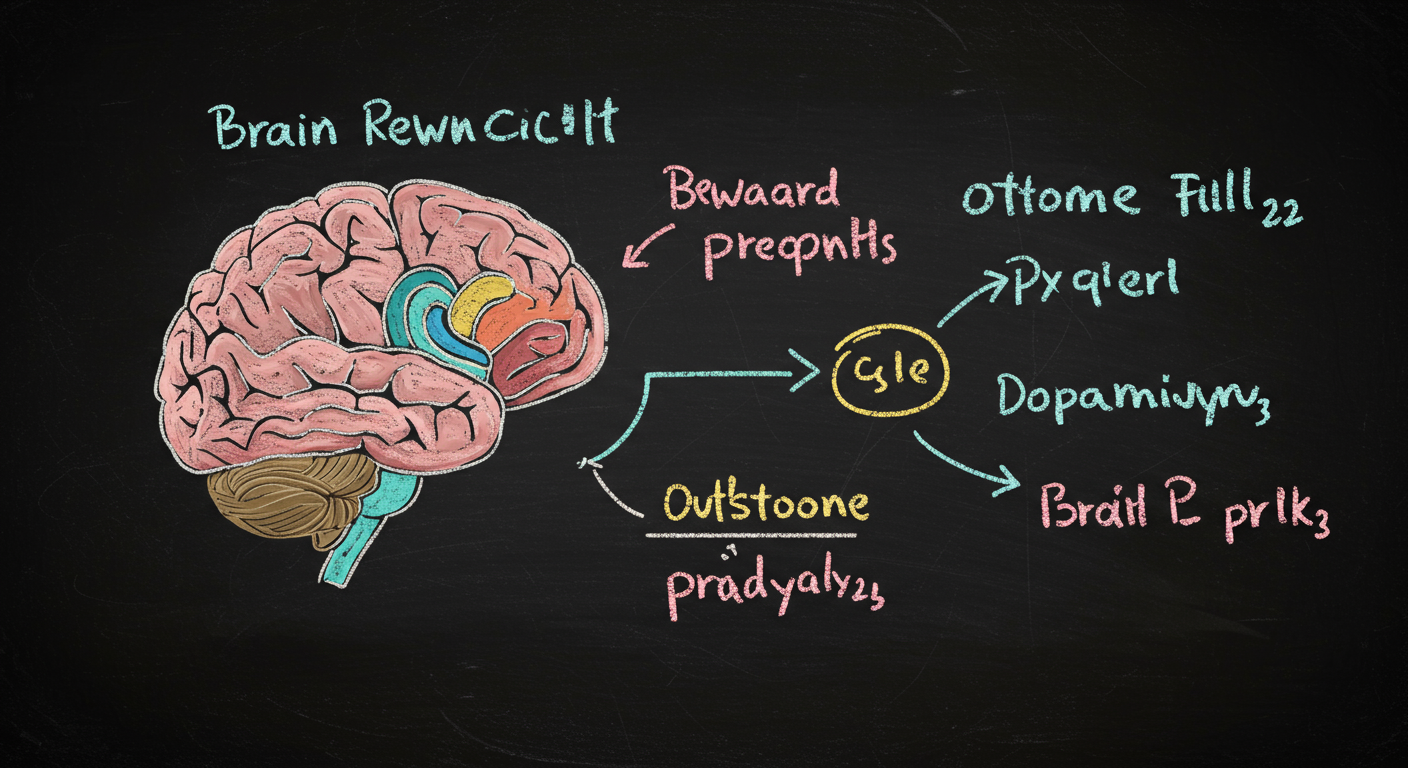
Why uncertainty grabs attention
Variable rewards create stronger learning signals than fully predictable rewards. If the payoff is uncertain, the brain keeps updating. That is one reason intermittent reinforcement is so powerful.
Dopamine, tolerance, craving, and withdrawal
Addiction and dopamine
Repeated drug exposure can change how dopamine circuits respond.
Common patterns include:
Tolerance: the same dose has less effect. Craving: cues trigger strong wanting. Withdrawal: symptoms appear when use stops.
Important nuance
Addiction involves more than dopamine. Stress, habit learning, memory, and environment all contribute.
Why dopamine detox is misleading
Why “dopamine detox” is a bad label
You cannot detox from dopamine. Your brain needs dopamine all the time.
What people usually want is less compulsive stimulation and better attention control.
What actually helps
Reduce cues that trigger automatic checking. Add friction to distracting habits. Create clear rewards for better habits. Use sleep, exercise, and structured routines to support attention.
Better substitute for dopamine detox
Think in terms of habit design. If a behavior is too easy to start, make it harder. If a good habit is too hard to start, make it easier.
Final takeaway
Dopamine is a prediction and motivation signal. It helps the brain learn what to repeat. That is very different from being a pleasure chemical.
Keep going with Slate
Pick up where this left off in your own voice session.