What Is Consciousness? The Hardest Question
Can machines be conscious? What even is subjective experience? Philosophy and neuroscience tackle the hard problem.
- Chalmers' hard problem of consciousness
- Competing theories: integrated information, global workspace, higher-order
- The Chinese room argument and AI consciousness
- What neuroscience can and cannot tell us about subjective experience
1. What consciousness means
What Is Consciousness? The Hardest Question
Can machines be conscious? What even is subjective experience? Philosophy and neuroscience tackle the hard problem.
Consciousness: the basic distinction
Consciousness is often divided into two parts:
- Wakefulness and responsiveness: being awake, able to perceive, remember, and act
- Subjective experience: having a first-person point of view
That second part is called phenomenal consciousness.
Why this matters
A system can process information without any obvious inner life. The philosophical question is whether experience itself can be explained in the same way we explain memory, vision, or language.
Key idea
The easy questions of consciousness ask how brains discriminate, integrate, and report information. The hard problem asks why any of that should be accompanied by experience at all.
2. Chalmers and the hard problem
Chalmers’ hard problem of consciousness
David J. Chalmers introduced the distinction in 1995.
Easy problems: how the brain performs functions such as
- discriminating stimuli
- integrating information
- controlling behavior
- producing verbal reports
Hard problem: why these functions are accompanied by subjective experience
Why the distinction is powerful
It pushes us to separate explanation of function from explanation of feeling.
A useful analogy
A recipe can explain how to bake bread. It can even predict the smell, texture, and rise. But the hard problem asks whether a perfect recipe for brain activity also explains why there is an inner taste of being alive.
3. Three major theories
Three major theories of consciousness
Global workspace theory
Consciousness happens when information is globally broadcast across many systems.
Integrated information theory
Consciousness depends on how much a system integrates information.
Higher-order theory
A mental state is conscious when the brain has a representation of that state.
What each theory tries to explain
- Global workspace: access, report, attention
- Integrated information: why experience is unified
- Higher-order: self-awareness and reflective awareness
Tradeoffs
Global workspace is strong on testable predictions. Integrated information is ambitious about the nature of experience. Higher-order theory explains why some states feel consciously owned by the subject.
4. The Chinese room and AI consciousness
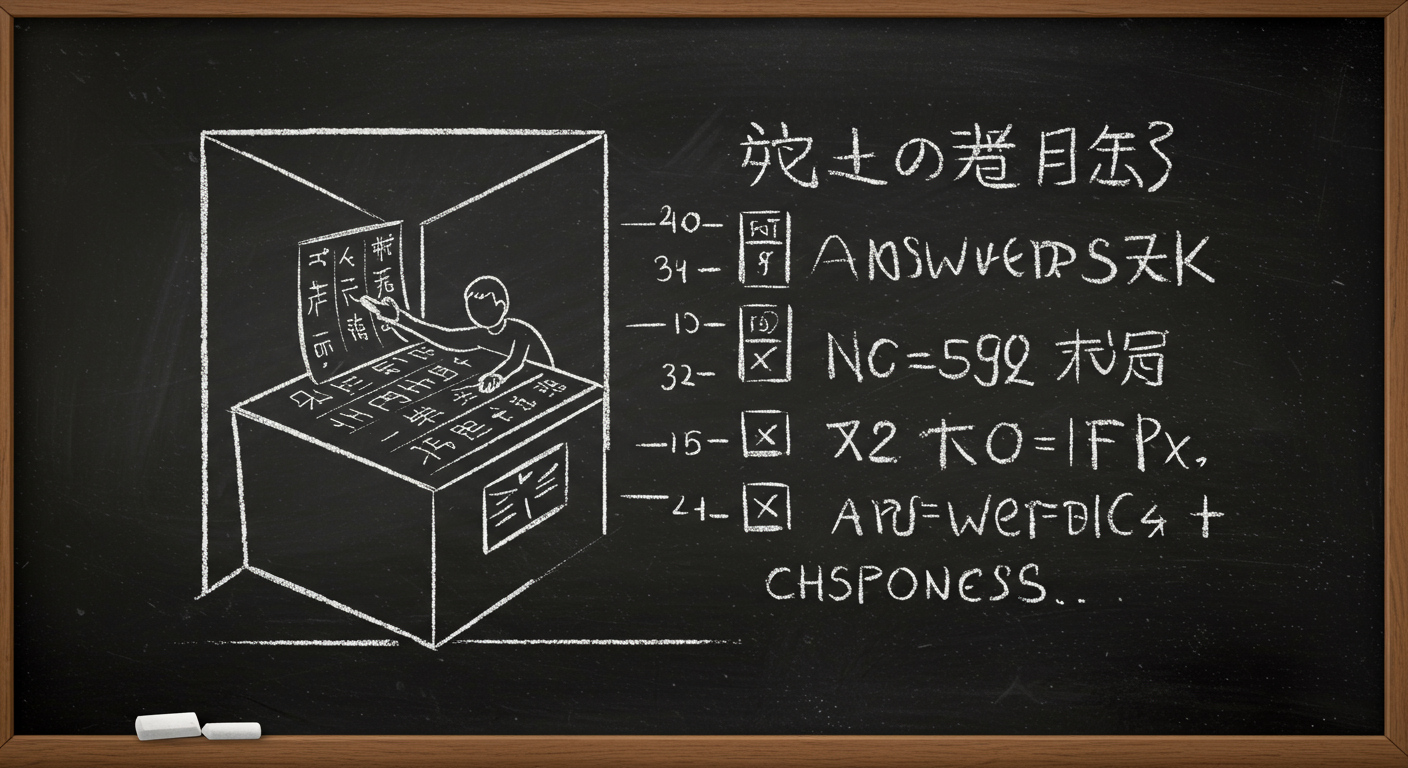
The Chinese room argument
John Searle introduced the argument in 1980.
The core distinction is:
- Syntax: formal symbol manipulation
- Semantics: meaning and understanding
A system can have the first without obviously having the second.
Why this matters for AI consciousness
Passing a language test does not by itself prove subjective experience.
AI takeaway
A machine can be impressive without being conscious. The hard question is not whether it can imitate conversation. It is whether there is something it is like to be that system.
5. What neuroscience can and cannot tell us
What neuroscience can tell us
Neuroscience studies neural correlates of consciousness, or NCC.
It can measure:
- wakefulness versus unconsciousness
- responses to stimuli
- dream reports after sleep
- effects of anesthesia
What it cannot yet tell us
A brain scan cannot directly display subjective experience itself.
Bottom line
Neuroscience is excellent at mapping the conditions of consciousness. Philosophy asks why those conditions are accompanied by experience at all.
That is why consciousness remains one of the deepest problems in science and philosophy.
Keep going with Slate
Pick up where this left off in your own voice session.