What the cloud physically is
0:006:52
Computer Science

What Is Cloud Computing (And Why Does It Matter)?

AWS, Azure, serverless — the invisible infrastructure running every app you use, explained without the jargon.

Apr 22, 20267 min listen5 chapters
What you'll learn
  • What 'the cloud' actually means physically
  • IaaS, PaaS, SaaS — the three layers of cloud services
  • Why companies moved from servers in closets to AWS
  • Serverless, edge computing, and where cloud is heading

What the cloud physically is

note

What Is Cloud Computing (And Why Does It Matter)?

AWS, Azure, serverless — the invisible infrastructure running every app you use, explained without the jargon.

note

What the cloud physically means

Cloud computing is remote access to shared computing resources owned by a provider.

Those resources live in data centers. A data center is a purpose-built facility with:

  • server racks
  • storage systems
  • network equipment
  • cooling
  • backup generators and batteries
  • physical security

The internet is the delivery layer. The cloud is the hardware and software behind it.

Why the name stuck

The cloud icon came from network diagrams. Engineers used a cloud shape to hide the messy parts of the internet between two systems. The name survived because it fit the experience: you send a request, and computing appears from somewhere far away.

A useful mental model

Think of cloud computing like renting an apartment.

You get a place to live. You do not have to pour concrete, wire the building, or fix the roof. The landlord handles the building. You handle how you use the space.

Cloud providers do the same for computing infrastructure.

diagram
chart · bar
Major cloud providers launch timeline
AWS 2006Google Cloud 2008Azure 2010GCP name 2011

IaaS, PaaS, and SaaS

note

The three cloud service models

IaaS: Infrastructure as a Service

You manage the operating system, runtime, app code, and data.

Examples: Amazon EC2, Google Compute Engine, Azure Virtual Machines.

PaaS: Platform as a Service

You manage the app code and data. The provider manages the platform.

Examples: Heroku, Google App Engine, Azure App Service.

SaaS: Software as a Service

You use the finished software.

Examples: Gmail, Slack, Salesforce, Microsoft 365.

The tradeoff

More control means more operational responsibility. Less control means faster delivery and less maintenance.

That tradeoff is the core of cloud adoption.

diagram
note

A simple comparison

IaaS is closest to owning the machine.

PaaS is closest to renting a workshop with tools already set up.

SaaS is closest to walking into a store and buying the finished product.

The right choice depends on whether your team wants flexibility, speed, or simplicity.

Why companies left server closets

note

Why on-premises servers became a burden

Running servers in-house means paying for:

  • hardware purchases
  • electricity and cooling
  • physical security
  • backups and disaster recovery
  • software updates and patching
  • spare machines for failures
  • staff on call

Why cloud won

Cloud providers spread costs across millions of customers. That creates:

  • lower upfront cost
  • faster setup
  • easier scaling
  • better geographic reach
  • built-in redundancy options

Real-world example

Netflix announced its cloud migration in 2010 and later became one of the best-known large-scale AWS users. The point was not just cost. It was resilience and speed of change.
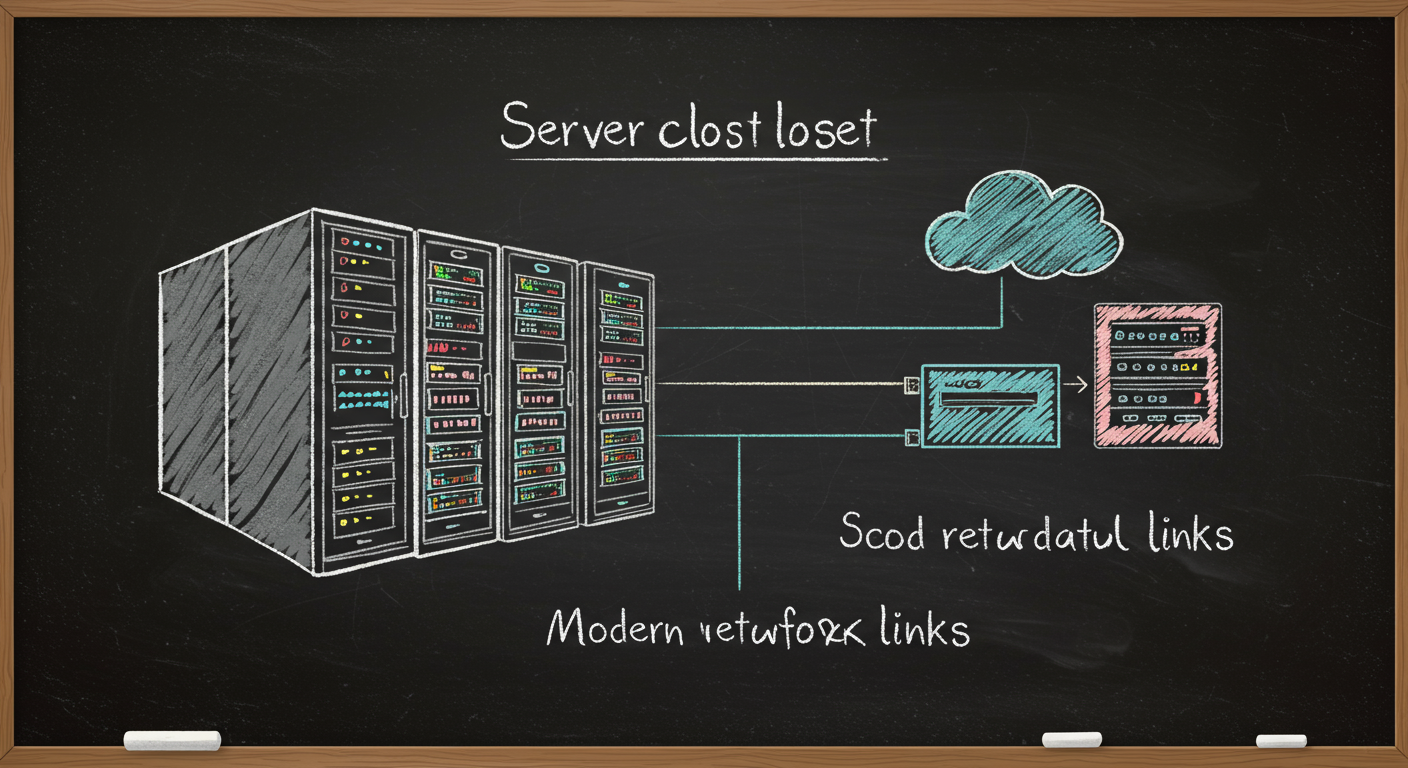
illustration
a server closet evolving into a modern cloud data center with racks, cables, cooling, and network links
diagram
note

Elastic scaling

Elastic scaling means resources grow or shrink with demand.

If a shopping app gets 10 times more traffic on Black Friday, the cloud can add more servers. When traffic drops, those servers can be removed.

That flexibility is one of the biggest reasons cloud computing matters.

Serverless and the moving edge

note

Serverless

Serverless is an execution model where the provider handles server management.

Examples:

  • AWS Lambda, launched in 2014
  • Azure Functions, launched in 2016
  • Google Cloud Functions, launched in 2017

Why teams use it

  • no idle server to pay for
  • automatic scaling for many workloads
  • quick event-driven development

Edge computing

Edge computing runs code closer to the user or device.

That reduces round-trip time. For interactive apps, shaving even 30 to 80 milliseconds can feel faster.

diagram
chart · line
Latency and distance
Local networkSame citySame regionCross continentGlobal route

Choosing the right cloud model

note

How to choose

Use IaaS when you need:

  • custom operating system control
  • special networking
  • legacy software

Use PaaS when you need:

  • faster deployment
  • less server maintenance
  • simpler scaling

Use SaaS when you need:

  • a finished business tool
  • minimal setup
  • predictable administration

Use serverless when you need:

  • event-driven code
  • bursty traffic
  • pay-per-use execution

Use edge computing when you need:

  • lower latency
  • global users
  • fast response near the device
diagram
note

The big idea

Cloud computing is not magic. It is industrialized computing.

The same way factories made cars cheaper and more reliable than hand-building them, cloud providers made compute, storage, and networking available on demand. That is why cloud computing matters: it turns infrastructure from a fixed purchase into a flexible service.

Transcript

Welcome to Slate. Today we're looking at What Is Cloud Computing (And Why Does It Matter)?. We'll cover What 'the cloud' actually means physically, IaaS, PaaS, SaaS — the three layers of cloud services, Why companies moved from servers in closets to AWS, and Serverless, edge computing, and where cloud is heading. Let's get into it.

The cloud is not a place in the sky. It is someone else’s computers, running in real buildings. Here’s the physical picture: racks of servers, storage arrays, network switches, backup power, and cooling systems packed into data centers. Amazon Web Services launched in 2006. Microsoft Azure followed in 2010. Google Cloud Platform arrived in 2008, then expanded under that name in 2011. These companies rent pieces of that giant machine over the internet. Think of it like a city utility grid. You do not build your own power plant to turn on a lamp. You plug into the grid and pay for what you use. Cloud computing works the same way for compute, storage, and networking. A laptop in a cafe can connect to a server in Northern Virginia, Dublin, or Singapore in milliseconds to hundreds of milliseconds, depending on distance and routing. The key shift is ownership. With on-premises computing, a company buys servers, installs them in a closet or data room, and becomes responsible for everything: hardware failures, patches, power, cooling, and spare parts. In the cloud, the provider owns the building and the machines. The customer rents capacity and focuses on the software.

Cloud services come in layers. The easiest way to see them is to ask one question: who manages what? Infrastructure as a Service gives you the raw building blocks. Platform as a Service gives you a managed runtime. Software as a Service gives you a finished application. With Infrastructure as a Service, or IaaS, you rent virtual machines, disks, and networks. Amazon Elastic Compute Cloud, launched in 2006, is the classic example. You choose the operating system, install software, and patch it yourself. It is like renting an empty storefront. With Platform as a Service, or PaaS, the provider manages the operating system, runtime, and often scaling. Heroku is a well-known example. You push code, and the platform runs it. That is like renting a furnished kitchen. You still cook, but the stove, plumbing, and electricity are already there. With Software as a Service, or SaaS, you just use the application. Gmail, Salesforce, and Microsoft 365 are SaaS. You do not manage servers or deployment. You open the app and work. These layers are not just labels. They define responsibility, speed, and control. More control usually means more work. More managed service usually means less maintenance.

Before cloud computing, many companies ran their own servers in office closets or small server rooms. That worked until demand grew. Then the hidden costs showed up. A server is not just a box. It needs power, cooling, backups, security, replacement parts, monitoring, and someone awake when it fails at 2 a.m. A famous example is Netflix. It moved major parts of its infrastructure to Amazon Web Services after a 2008 database corruption incident. Netflix wanted to scale globally and survive failures better than a single data center allowed. Cloud made that easier because capacity could grow and shrink with demand. The economics matter. If you buy hardware for peak traffic, much of it sits idle on ordinary days. That is like owning 20 delivery vans because of one holiday rush. Cloud lets you rent 5 vans most days and 20 only when needed. That is why startups loved it. They could launch without spending millions on hardware. Cloud also changed reliability. Providers run multiple availability zones, which are separate facilities in a region. If one building has trouble, traffic can move to another. That is much harder to do with one closet in one office.

Serverless does not mean there are no servers. It means you do not manage them. The provider runs the machines, starts your code when needed, and shuts it down when idle. AWS Lambda launched in 2014 and made this model famous. You pay for the time your code actually runs, often measured in milliseconds. That changes how teams build software. Instead of keeping a server waiting all day, you write small functions that react to events: an image upload, a payment, a database change. It is like a light switch connected to motion sensors. Nothing happens until there is a trigger. Edge computing pushes some of that work closer to users. Instead of sending every request to one faraway region, cloud providers place compute near the edge of the network. That can reduce latency for things like video delivery, gaming, or fraud detection. Cloudflare and AWS both offer edge services for this. The future is not one model replacing all others. It is a mix. Large databases may stay in central regions. Fast user interactions may move to the edge. Event-driven logic may run serverless. Cloud is becoming a toolkit, not a single place.

Cloud is not one decision. It is a set of choices. A startup building a new web app might use SaaS for email, PaaS for deployment, and a managed database in the cloud. A bank may keep sensitive systems on private infrastructure while using public cloud for analytics. A video app may put content delivery at the edge and core logic in a central region. Here is the practical test. If your team wants maximum control and has operations expertise, IaaS may fit. If your team wants to ship quickly with less maintenance, PaaS or SaaS may be better. If a task is event-driven and short-lived, serverless can save money and simplify scaling. If users are far away from your main region, edge services can improve response time. The cloud matters because it changed the default. In the old model, every company had to become a small data center operator. In the cloud model, infrastructure is a service you can rent, resize, and discard. That lets teams focus on the product instead of the plumbing. The plumbing still exists. It is just farther away, more standardized, and shared at enormous scale.

XLinkedInWhatsApp

Keep going with Slate

Pick up where this left off in your own voice session.

Built with Slate