1. What inflation is, and what it is not
0:007:59
Business

What Causes Inflation (And Why Should You Care)?

Demand-pull, cost-push, money supply — why prices rise, what the Fed does about it, and how it hits your wallet.

Apr 22, 20268 min listen5 chapters
What you'll learn
  • The three types of inflation: demand-pull, cost-push, monetary
  • How CPI is calculated and what it misses
  • The Fed's tools: interest rates, open market operations, QE
  • How inflation erodes savings and why it matters for your money

1. What inflation is, and what it is not

note

What Causes Inflation (And Why Should You Care)?

Demand-pull, cost-push, money supply — why prices rise, what the Fed does about it, and how it hits your wallet.

note

Inflation: the big idea

Inflation is a sustained rise in the average price level.

It is not the same as one item getting more expensive.

A single price jump can come from a shortage, a tax, or a bad harvest.

Inflation is broader. It shows up across many categories at once.

Why it matters

  • Your paycheck buys less if wages do not keep up
  • Savings lose purchasing power over time
  • Interest rates, mortgages, and loans all react to inflation
  • Businesses change pricing, inventory, and hiring plans

A useful benchmark

At 3% inflation, prices roughly double in 24 years. At 6% inflation, prices roughly double in 12 years.

That is why small differences in inflation compound into large differences in real life.

chart · line
Price growth at different inflation rates
Year 0Year 5Year 10Year 15Year 20Year 25
equation
Doubling time72inflation rate\text{Doubling time} \approx \frac{72}{\text{inflation rate}}
diagram
note

CPI in one sentence

The Consumer Price Index measures how much the cost of a typical basket of goods and services changes over time.

That basket is meant to represent urban consumers, not every household in every situation.

2. Demand-pull inflation: too much spending chasing too few goods

note

Demand-pull inflation

Demand-pull inflation happens when spending grows faster than supply.

The economy is like a restaurant with a fixed number of tables. If too many diners arrive at once, prices rise or waiting lists get longer.

Common triggers

  • Strong consumer spending
  • Low interest rates
  • Government stimulus
  • Rapid credit growth
  • Optimistic expectations about future prices

Where it shows up first

  • Housing and rent
  • Cars and durable goods
  • Services with limited capacity, like travel and dining
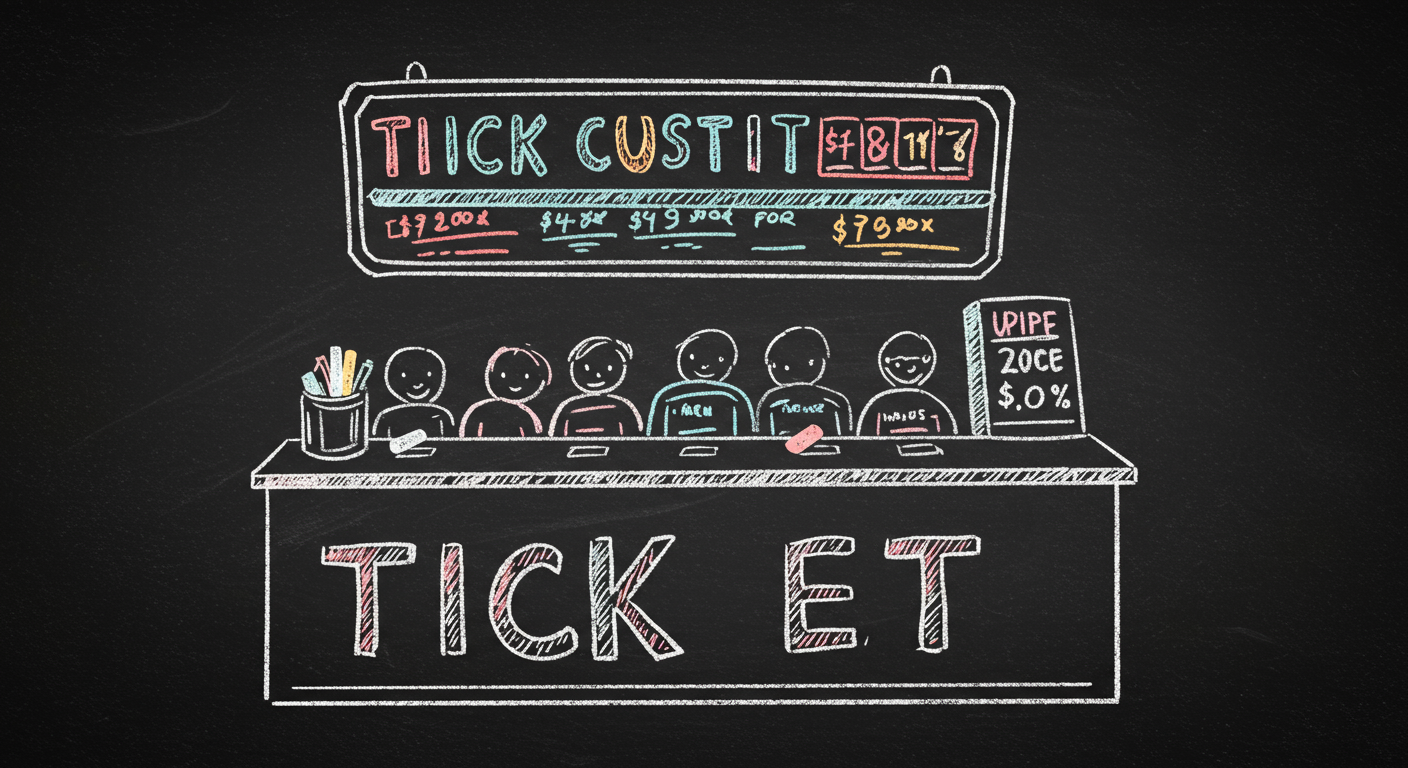
diagram
illustration
a crowded ticket counter with many buyers competing for a limited number of tickets and prices displayed rising
note

Real-world example

In 2021, U.S. consumer demand for goods surged while supply chains were still disrupted. That mismatch helped push up prices for cars, furniture, and appliances.

The lesson is simple: when demand outruns capacity, prices become the pressure valve.

equation
If AD and AS is slow to respond, then P\text{If } AD \uparrow \text{ and } AS \text{ is slow to respond, then } P \uparrow

3. Cost-push inflation: when production gets more expensive

note

Cost-push inflation

Cost-push inflation begins when production becomes more expensive.

Common cost shocks include:

  • Oil and gas prices
  • Wages
  • Shipping and freight costs
  • Food and commodity prices
  • Tariffs or taxes on inputs

Why it matters

Even if demand is weak, prices can still rise if costs rise faster.

That is why inflation can appear during slow growth or recessions.

chart · bar
Example bakery cost breakdown
FlourLaborEnergyPackagingOther
diagram
note

Historical anchor

The 1973 oil embargo and the 1979 energy shock pushed U.S. inflation sharply higher. That is the textbook case of a supply-side price shock spreading through the whole economy.

Analogy

Think of a factory as a kitchen. If the price of every ingredient goes up, the restaurant can either shrink profits or raise menu prices.

equation
Higher input costHigher unit costHigher final price\text{Higher input cost} \rightarrow \text{Higher unit cost} \rightarrow \text{Higher final price}

4. Monetary inflation, CPI, and what the Fed actually does

note

Monetary inflation

If the money supply grows faster than real output for long enough, each dollar can buy less.

That does not mean every rise in prices comes from money growth. It means money growth can be a powerful underlying driver.

The Fed’s main tools

  • Federal funds rate target
  • Open market operations
  • Quantitative easing, or QE
  • Reserve requirements, now rarely changed

Why the Fed moves slowly

Policy affects the economy with long and variable lags. A rate hike today may influence inflation many months later.

diagram
note

CPI basics

The Consumer Price Index is built from a market basket of goods and services. The Bureau of Labor Statistics weights categories using spending patterns. Housing has a large weight, and shelter is the biggest single driver in many recent inflation readings.

What CPI misses

  • It does not perfectly capture quality changes
  • It does not fully reflect your personal spending mix
  • It excludes asset prices like stocks and most home prices
  • It may not reflect substitution exactly the way you shop
equation
i=PtPt1Pt1×100%i = \frac{P_t - P_{t-1}}{P_{t-1}} \times 100\%

5. How inflation hits your wallet, and how to think about it

note

How inflation erodes savings

What matters is real return, not just nominal return.

Real return is approximately:

  • Nominal interest rate minus inflation

If your savings earn 2% and inflation is 4%, your purchasing power falls by about 2%.

Why this matters for households

  • Rent often rises with broad inflation and local housing demand
  • Variable-rate debt gets more expensive when rates rise
  • Cash loses purchasing power if it sits too long
  • Fixed incomes are vulnerable unless they are indexed
chart · area
Savings value vs inflation
StartAfter 1 yearAfter 2 yearsAfter 3 yearsAfter 4 years
diagram
note

Three causes, one outcome

Demand-pull means buyers are outbidding supply. Cost-push means producers face higher costs. Monetary inflation means too much money growth relative to output.

Real life often mixes all three. That is why inflation analysis is about tracing the source, not just reading the headline number.

Transcript

Welcome to Slate. Today we're looking at What Causes Inflation (And Why Should You Care)?. We'll cover The three types of inflation: demand-pull, cost-push, monetary, How CPI is calculated and what it misses, The Fed's tools: interest rates, open market operations, QE, and How inflation erodes savings and why it matters for your money. Let's get into it.

Inflation means the general price level is rising over time. If a loaf of bread costs 3 dollars this year and 3 dollars 15 cents next year, that single price change may be noise. Inflation is the broader pattern across many goods and services. The Consumer Price Index, or C-P-I, tracks that pattern using a fixed basket of items bought by urban consumers. In the United States, the Bureau of Labor Statistics updates that basket with data from the Consumer Expenditure Survey. Think of inflation like the tide. One wave can be higher than another, but inflation is the rising waterline. The chart on the screen shows why people care. A 3 percent inflation rate sounds small, but prices double in about 24 years at that pace. That is the Rule of 72. Divide 72 by the inflation rate, and you get the rough doubling time. So 6 percent inflation cuts the doubling time to about 12 years. That is why a steady 3 percent matters for long-term savings, wages, and rent. Not every price increase is inflation. A drought can push up lettuce prices. A chip shortage can raise car prices. Those are relative price changes. Inflation is the average pressure across the economy. Economists separate the cause from the symptom so they can ask the right question: is demand too strong, are costs rising, or is the money supply growing too fast?

Demand-pull inflation happens when total spending grows faster than the economy’s ability to produce. Imagine a concert with 500 tickets and 5,000 fans. The price rises because buyers are competing for a limited number of seats. The same logic applies to houses, cars, labor, and restaurant tables. The strongest demand-pull episodes usually follow a shock that leaves people with cash and confidence while supply is still constrained. After the pandemic lockdowns, demand for goods surged. In the United States, real personal consumption rebounded quickly in 2021, while ports, factories, and shipping networks were still strained. Prices rose because buyers returned faster than supply could. The diagram shows the chain. Higher incomes, stimulus checks, low borrowing costs, and strong expectations can all push demand up. If businesses cannot increase output quickly, they raise prices instead. That is especially visible in housing, where supply is slow to adjust. Building takes time, zoning limits supply, and mortgage rates shape demand. Demand-pull inflation is not just “people spending too much.” It is spending outrunning capacity. The key question is whether the economy has slack. If factories sit idle and workers are unemployed, extra demand can raise output without much inflation. If the economy is already near full capacity, extra demand mostly raises prices.

Cost-push inflation starts on the supply side. Firms face higher costs for energy, wages, shipping, or raw materials, and they pass some of that increase on to customers. A bakery is a good example. If wheat, diesel, and labor all get more expensive, each loaf costs more to produce. The price tag rises even if customers are not suddenly spending more. The 1970s are the classic U.S. example. Oil shocks in 1973 and again in 1979 raised energy costs across the economy. Gasoline, transportation, plastics, and heating all became more expensive. Inflation climbed while growth weakened. That mix is called stagflation: slow growth plus high inflation. It is painful because the usual fix for weak growth can worsen inflation, and the usual fix for inflation can weaken growth. The chart on the screen shows a simple cost breakdown. When one major input jumps, businesses have choices. They can absorb the hit and earn less profit. They can improve productivity. Or they can raise prices. The choice depends on competition, brand power, and how much demand customers still have. A luxury brand may raise prices more easily than a discount store. Cost-push inflation often begins with a shock, but it can spread if workers demand higher wages to keep up, and firms then raise prices again. That loop is one reason central banks watch energy, wages, and supply chains so closely.

Monetary inflation is the idea that too much money growth, relative to real output, can eventually push prices higher. Milton Friedman’s famous line was that inflation is “always and everywhere a monetary phenomenon.” That is a strong statement, and in practice the link is not instant. Money growth can sit in bank accounts, flow into assets, or move through the economy with a lag. But over time, if money grows much faster than the economy’s capacity to produce goods and services, the price level tends to rise. Here is where the Federal Reserve comes in. The Fed does not set every price. It influences financial conditions. Its main tool is the federal funds rate, the overnight rate banks charge each other. Higher rates cool borrowing, spending, and asset prices. Lower rates do the opposite. The Fed also conducts open market operations, buying or selling Treasury securities to affect reserves in the banking system. During quantitative easing, or Q-E, the Fed buys large amounts of Treasury and mortgage-backed securities to push down longer-term interest rates. The sequence on the screen shows the transmission. Fed action affects short-term rates, then credit conditions, then demand, then inflation. The Fed works with lags. Rate changes can take 12 to 18 months, sometimes longer, to show up fully in inflation data. That is why central banking is more like steering a ship than flipping a switch.

Inflation matters because money is a claim on future goods and services. If prices rise 4 percent and your savings earn 2 percent, your purchasing power falls. That is the real test. Nominal dollars are the numbers on the account statement. Real dollars are what those numbers can buy. Here is a simple example. Suppose you have 10,000 dollars in a savings account earning 1 percent. After one year, you have 10,100 dollars. If inflation is 3 percent, the goods you could buy with 10,100 dollars last year would now cost about 10,300 dollars. You are behind in real terms. That is why low interest rates can quietly punish savers when inflation is high. The Fed tries to keep inflation near its 2 percent goal over the longer run. That target helps households and firms make plans. It also gives the central bank room to cut rates in a downturn. But no target removes the pain of a surprise price surge. Rent, groceries, gasoline, and insurance are not abstract numbers. They hit monthly budgets. The final diagram brings it together. Demand-pull, cost-push, and monetary forces can all raise inflation, sometimes at the same time. When you know which force is driving prices, you can predict the Fed’s response better and protect your own finances more intelligently. That means keeping an eye on real returns, debt costs, and the categories in your budget that move fastest.

XLinkedInWhatsApp

Keep going with Slate

Pick up where this left off in your own voice session.

Built with Slate