What Causes Depression? Beyond the Serotonin Myth
The chemical imbalance theory is outdated. Inflammation, neuroplasticity, gut-brain, and social factors — the real picture.
- Why the 'chemical imbalance' theory is an oversimplification
- The roles of inflammation, neuroplasticity, and HPA axis dysregulation
- Gut-brain connection and the microbiome's role in mood
- The biopsychosocial model: why depression is never one thing
1. Why the serotonin story is too small
What Causes Depression? Beyond the Serotonin Myth
The chemical imbalance theory is outdated. Inflammation, neuroplasticity, gut-brain, and social factors — the real picture.
Depression is not one chemical problem
The old “chemical imbalance” idea is too simple for what depression actually is.
What the evidence says
- Serotonin is involved in mood regulation, but low serotonin has not been shown to be a single, universal cause of depression.
- In 2022, a large review in Molecular Psychiatry found no consistent support for the idea that depression is caused by a shortage of serotonin.
- Depression is a syndrome, meaning a cluster of symptoms with many possible causes.
A better analogy
Think of depression like a citywide transit failure. A delayed subway, a power outage, a storm, and a road closure can all leave people stuck. The result looks similar from the outside, but the causes are different.
Why this matters
If you think depression has only one cause, you will miss the people whose symptoms are driven more by stress biology, inflammation, sleep loss, trauma, or isolation.
Why the chemical imbalance story caught on
It was memorable. It also reduced stigma for some people by making depression sound medical rather than moral.
But it also created a false promise: if depression is just low serotonin, then one pill should fix everyone. Real life is messier.
What clinicians actually see
- Some people improve with antidepressants.
- Some improve most with psychotherapy.
- Some need both.
- Some need treatment for sleep apnea, thyroid disease, substance use, or trauma-related symptoms alongside depression care.
Bottom line
Depression is real biology. It is just not one-biomarker biology.
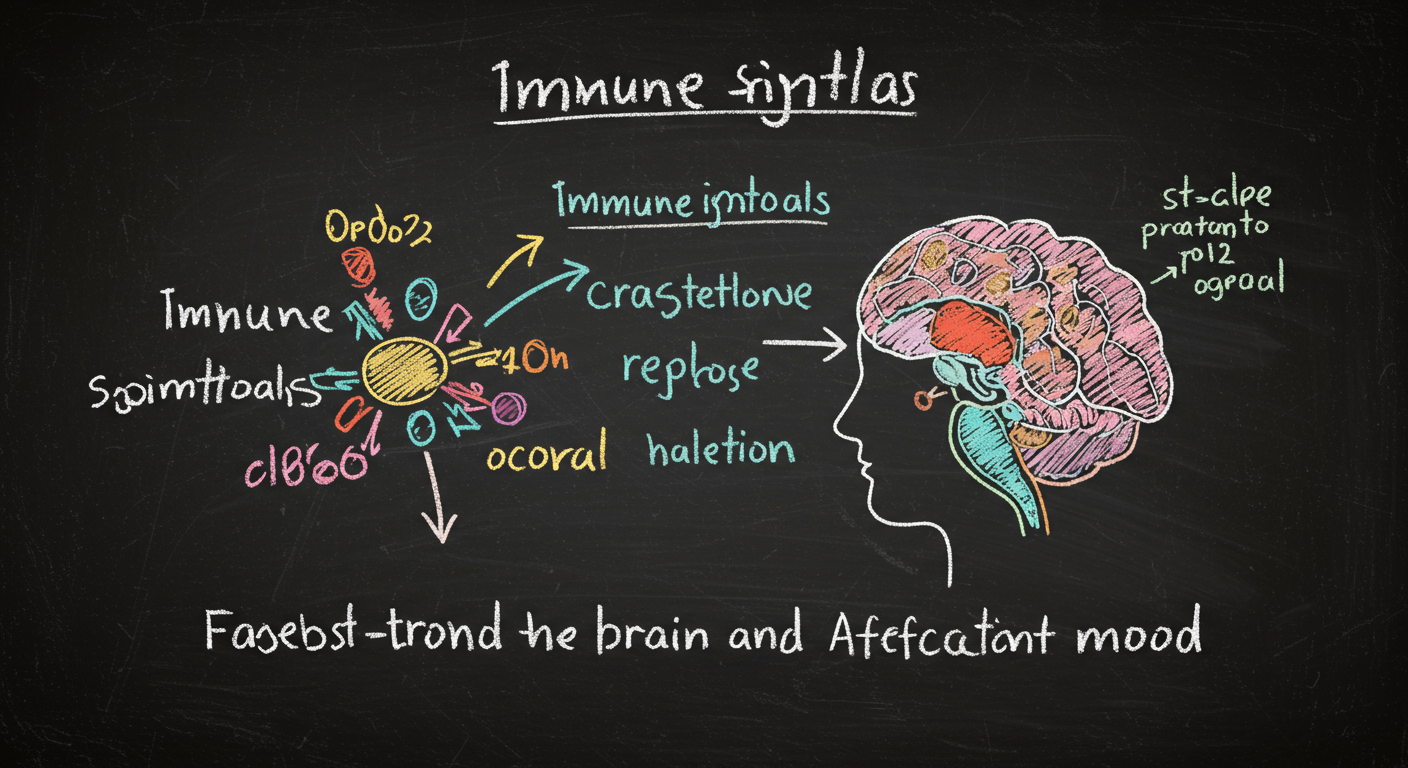
2. Inflammation and the immune system
Inflammation can change mood and motivation
The immune system does more than fight infection. It also sends chemical signals that affect the brain.
Key terms
- Cytokines: immune messenger proteins
- C-reactive protein, or CRP: a blood marker of inflammation
- Interleukin-6, or IL-6: another inflammation signal often studied in depression
What inflammation can do
- Increase fatigue
- Reduce motivation and pleasure
- Slow thinking
- Increase pain sensitivity
- Make the body feel “sick” even without an infection
Important caution
Inflammation is not the whole explanation. Many people with depression do not have elevated inflammatory markers.
Why some symptoms look inflammatory
Inflammation often produces a cluster called sickness behavior.
That includes:
- Low energy
- Social withdrawal
- Loss of appetite
- Slower movement
- Brain fog
These overlap with depression. That overlap is why researchers pay attention to the immune system when symptoms include strong fatigue and slowed thinking.
Real-world examples
- Rheumatoid arthritis and depression often co-occur.
- People with obesity can have higher baseline inflammation.
- Severe infections can trigger temporary depressive symptoms.
Treatment implication
If inflammation is part of the picture, treating only mood symptoms may not be enough. Sleep, exercise, medical care for chronic illness, and psychotherapy can all matter.
3. Neuroplasticity and the HPA axis
Neuroplasticity means the brain can change
Neuroplasticity is the brain’s ability to strengthen, weaken, and reorganize connections.
In depression
Chronic stress can bias the brain toward:
- Threat detection over reward
- Rumination over flexible thinking
- Avoidance over approach
Why this matters
Depression is often not a lack of willpower. It can be a learned and biologically reinforced state where the brain has become less flexible.
The HPA axis in plain language
HPA stands for hypothalamic-pituitary-adrenal axis.
It is the body’s main long-term stress system.
Normal job
- Wake you up
- Mobilize energy
- Help you respond to danger
When stress is chronic
- Cortisol rhythms can become flattened or dysregulated
- Sleep can worsen
- Mood can drop
- Concentration can suffer
Brain regions often studied
- Hippocampus: memory and context
- Amygdala: threat detection
- Prefrontal cortex: control and planning
Analogy
Think of a thermostat that keeps overshooting. The system is still working, but the settings are off.
4. The gut-brain connection
The gut-brain axis links digestion and mood
The gut and brain communicate through:
- The vagus nerve
- Immune signaling
- Hormones
- Microbial metabolites
The microbiome
The microbiome is the collection of microbes living in the digestive tract.
It may influence depression through:
- Inflammation
- Stress reactivity
- Production of short-chain fatty acids
- Effects on neurotransmitter-related pathways
What we know now
The evidence supports a connection. It does not support a simple “bad gut bacteria cause depression” story.
What is reasonable to do
The gut-brain link makes lifestyle care biologically relevant.
Helpful supports
- Regular meals
- Enough fiber from plants
- Sleep consistency
- Movement
- Medical care for GI disease or medication side effects
What not to overclaim
- No single probiotic has been proven to treat depression for everyone
- Gut health is not a replacement for mental health care
Useful rule
If a claim sounds like “fix the microbiome and depression disappears,” it is probably oversold.
5. The biopsychosocial model: depression has many causes
The biopsychosocial model explains depression better
Depression emerges from the interaction of three layers:
Biological
- Genes
- Stress hormones
- Inflammation
- Sleep and circadian rhythm
- Brain plasticity
Psychological
- Trauma history
- Coping style
- Rumination
- Learned helplessness
- Negative thinking patterns
Social
- Poverty
- Loneliness
- Relationship conflict
- Discrimination
- Work stress
Why this model is useful
It explains why two people can have the same diagnosis but need different treatment plans.
What a good treatment plan considers
A careful clinician asks:
- How long have symptoms lasted?
- Is there trauma or chronic stress?
- How is sleep?
- Any substance use?
- Any medical illness or inflammation-related condition?
- What is happening at work, home, and in relationships?
Big takeaway
Depression is not one broken part. It is a state that can be built by many different pressures, and it often needs more than one kind of help.
Keep going with Slate
Pick up where this left off in your own voice session.