What Are Human Rights (And Where Do They Come From)?
Natural law, the UN Declaration, cultural relativism — who decides what rights are universal, and why it matters now.
- The philosophical origins: natural law, social contract, dignity
- The Universal Declaration of Human Rights and how it was written
- Positive vs. negative rights and cultural relativism debates
- Current challenges: digital rights, AI, climate refugees
1. What a human right is
What Are Human Rights (And Where Do They Come From)?
Natural law, the UN Declaration, cultural relativism — who decides what rights are universal, and why it matters now.
What human rights mean
Human rights are standards that protect a person’s basic freedom, safety, and equal worth.
They answer a simple question: what must no government, employer, army, or crowd be allowed to do to a person?
Human rights are usually described as universal, inalienable, and equal.
Universal means they belong to everyone. Inalienable means they cannot be taken away just because a ruler dislikes you. Equal means they do not depend on wealth, citizenship, sex, religion, or race.
A useful way to think about them is as limits on power. If power is a river, rights are the banks that keep it from flooding human life.
Natural law and natural rights
Natural law is the idea that some moral truths can be known by reason and apply to everyone.
Natural rights are the rights said to follow from that moral order.
John Locke’s Second Treatise of Government was published in 1689. Locke argued that people in a state of nature have rights to life, liberty, and property, and governments exist to secure those rights.
That claim mattered politically. It helped shape the American Declaration of Independence in 1776 and later liberal constitutional thinking.
The key move is this: rights do not come from the state. The state is supposed to recognize them.
Negative and positive rights
Negative rights require others not to interfere.
Examples: freedom of speech, freedom of religion, protection from torture, privacy.
Positive rights require action and support.
Examples: education, health care, housing, social security.
Both matter. A free press is hollow if people are jailed for speaking. A right to education is hollow if children have no schools. Human rights law has grown by trying to protect both kinds.
2. The Universal Declaration of Human Rights
Why 1948 mattered
The Universal Declaration of Human Rights was adopted after World War II because the old assumption failed: that states would naturally protect their own people.
The Holocaust exposed what happens when law serves racial ideology instead of human dignity.
The declaration was meant to say, in public and in writing, that governments have obligations to all persons, not only to citizens they favor.
How it was written
The drafting process began in 1947 under the new United Nations Commission on Human Rights.
Eleanor Roosevelt served as chair. René Cassin helped shape the structure. The final text drew on many legal and philosophical traditions, including French republicanism, Christian thought, liberalism, and anti-colonial arguments.
That mix matters. The declaration was not written by one culture speaking for all others. It was built through negotiation among many cultures after a global war.
What the declaration contains
The declaration has 30 articles.
It covers civil and political rights such as life, liberty, fair trial, and free expression. It also covers social and economic rights such as work, rest, education, and an adequate standard of living.
Article 1 begins with a powerful claim: all human beings are born free and equal in dignity and rights.
That sentence is the declaration’s moral center.
3. Who decides what is universal?
Cultural relativism
Cultural relativism says moral standards should be understood in their cultural context.
This view is useful when it exposes arrogance, colonialism, and blind universal claims.
But it becomes dangerous when it is used to shield abuse from criticism.
Human rights law tries to hold a middle position: respect cultural difference, but do not allow culture to justify severe harm.
Positive and negative rights in practice
Negative rights are often easier to define because the duty is noninterference.
Positive rights are harder because they depend on resources.
For example, freedom from torture is a clear prohibition. A right to housing requires policy, money, land, and administration.
That does not make positive rights less real. It makes them more politically contested.
The universalism debate
Universalists say some rights belong to everyone because all humans share dignity.
Relativists say the meaning of rights changes across cultures and histories.
The strongest position is not that every society must look the same. It is that every person should be protected from extreme abuse, and every society should be judged by how it treats the vulnerable.
4. Human rights now: digital life, AI, and climate displacement
Digital rights
Digital rights apply human rights principles to online life.
They include privacy, data protection, freedom from unlawful surveillance, access to information, and protection from automated discrimination.
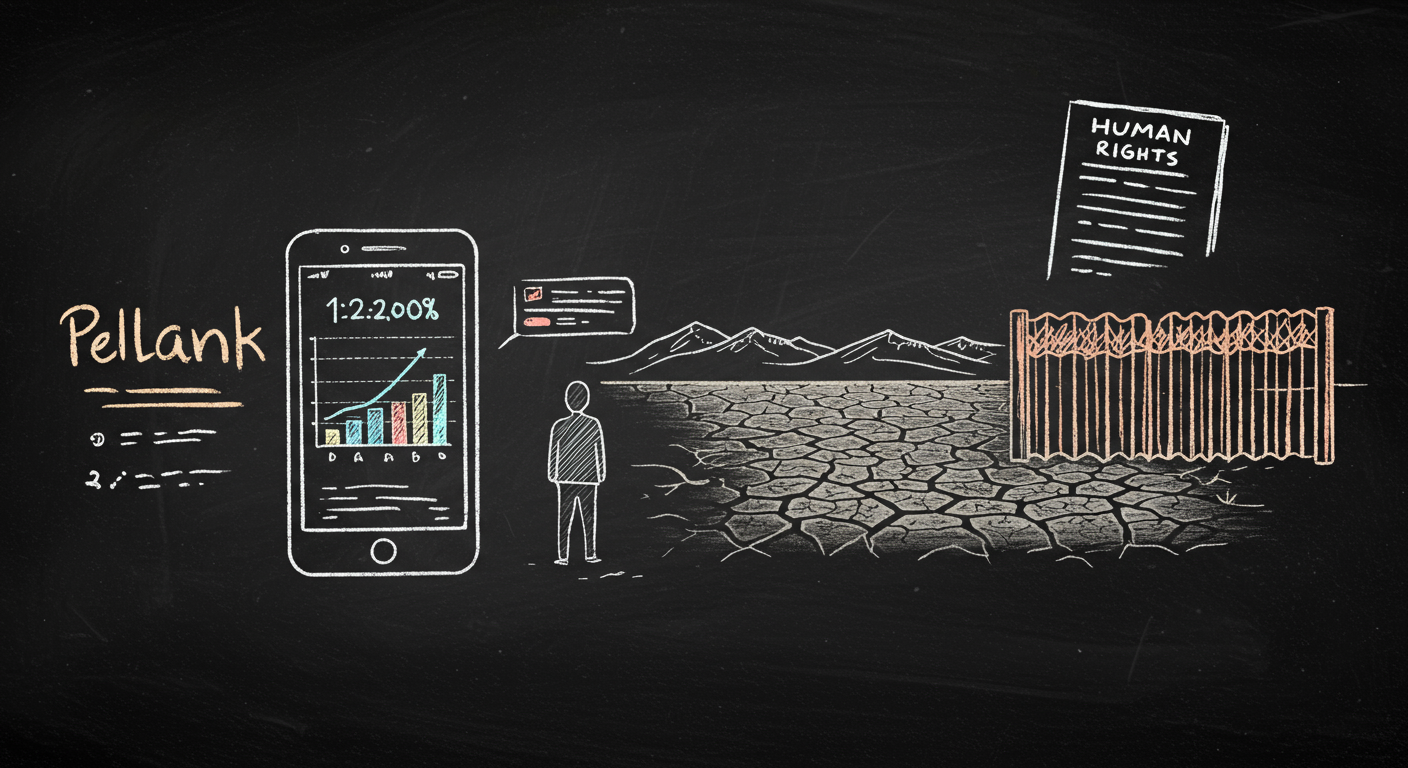
A smartphone can feel personal, but it is also a data machine. Every tap can become evidence about your habits, health, politics, and location.
AI and accountability
When an AI system affects housing, hiring, credit, or policing, the question is not only whether it is accurate.
The deeper question is whether people can understand, challenge, and correct the decision.
That is why transparency and due process matter. An opaque model can hide bias inside mathematics.
Climate refugees and displacement
The 1951 Refugee Convention defines a refugee as someone with a well-founded fear of persecution for reasons such as race, religion, nationality, political opinion, or membership in a particular social group.
Climate migrants often fall outside that definition.
That gap is one of the biggest human rights problems of the 21st century.
5. What to remember
Three big takeaways
Human rights begin with dignity, not permission. The Universal Declaration of Human Rights turned that idea into a global statement in 1948. The hardest debates now are about how to protect rights in digital systems, climate migration, and culturally diverse societies.
Key names and dates
Thomas Hobbes, 1651, Leviathan John Locke, 1689, Second Treatise of Government United Nations Universal Declaration of Human Rights, 10 December 1948 European Union General Data Protection Regulation, 25 May 2018 World Bank climate displacement estimate, 2021
Check your understanding
Can you explain the difference between a moral right and a legal right? Can you give one example of a negative right and one example of a positive right? Can you explain why the Universal Declaration of Human Rights was written after World War II? Can you name one modern rights issue that did not exist in 1948?
Keep going with Slate
Pick up where this left off in your own voice session.