What Are Fractals? The Geometry of Nature
Coastlines, snowflakes, blood vessels, and broccoli — why the same patterns repeat at every scale in nature.
- What self-similarity means and how to spot it everywhere
- The Mandelbrot set and infinite complexity from simple rules
- Fractal dimension: why coastlines have non-integer dimensions
- Applications in medicine, CGI, antenna design, and data compression
Chapter 1: Self-similarity in nature
What Are Fractals? The Geometry of Nature
Coastlines, snowflakes, blood vessels, and broccoli — why the same patterns repeat at every scale in nature.
Self-similarity
A shape is self-similar when smaller parts resemble the whole.
Natural examples
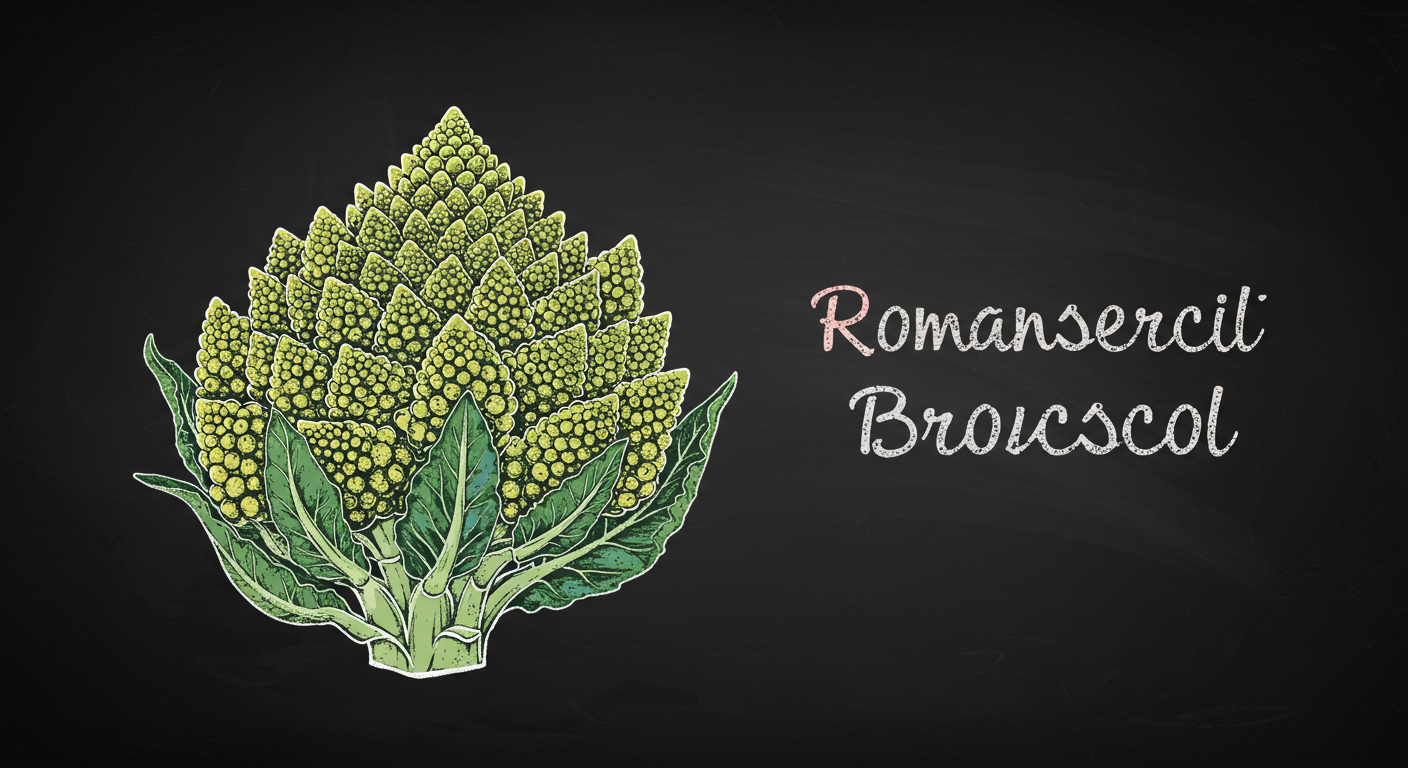
- Romanesco broccoli
- Ferns
- Tree branches
- River deltas
- Blood vessel networks
What to look for
- Repeated branching
- Similar roughness at different zoom levels
- Detail that does not disappear when you magnify
Important distinction
A repeated pattern is not automatically a fractal. A wallpaper pattern repeats exactly. A fractal repeats with new detail at smaller scales.
Why nature uses these patterns
Branching is a compact way to distribute material, energy, or information. A tree uses it to reach sunlight. Lungs use it to maximize surface area for gas exchange. Blood vessels use it to deliver oxygen to billions of cells.
The same basic rule can create very different-looking structures, because the rule is repeated many times with small changes at each step.
Chapter 2: The Mandelbrot set and simple rules
The Mandelbrot set
The Mandelbrot set is the set of complex numbers c for which the sequence
z₀ = 0 zₙ₊₁ = zₙ² + c
remains bounded.
Named facts
- Popularized by Benoit Mandelbrot in 1975
- Studied earlier in the 1910s by Gaston Julia and Pierre Fatou
- The boundary has infinite detail
Why it matters
A tiny rule can generate immense complexity. That is one reason fractals are central in modern mathematics and computer graphics.
def mandelbrot_escape(c, max_iter=100):
    z = 0
    for n in range(max_iter):
        z = z*z + c
        if abs(z) > 2:
            return n
    return max_iter

# Example: points with larger escape counts are closer to the boundary
for c in [0, -1, 0.3+0.5j, 1+1j]:
print(c, mandelbrot_escape(c))Why the boundary matters
Inside the set, the orbit stays bounded. Outside, it escapes. Near the boundary, tiny changes in c can flip the outcome. That sensitivity is what creates the intricate edge.
Chapter 3: Fractal dimension and the coastline problem
Fractal dimension
Fractal dimension describes how a pattern fills space across scales.
Reference values
- Line: 1
- Square: 2
- Coastline or jagged curve: between 1 and 2
Intuition
A smooth line is like a single thread. A fractal curve is like a tangled rope: it occupies more space than a line, but less than a surface.
Chapter 4: Fractals in medicine, CGI, and engineering
Applications of fractal geometry
Medicine
- Blood vessel analysis
- Lung branching patterns
- Retinal imaging
- Tumor morphology
CGI and animation
- Procedural mountains
- Cloud generation
- Coastlines and terrain
- Plant modeling
Engineering
- Compact multiband antennas
- Efficient space-filling layouts
Data compression
- Store repeating rules instead of every detail
- Especially useful when an image or signal has recursive structure
Tradeoffs
Fractal methods work best when the real system truly has scale-based repetition. They are less useful when the pattern is mostly random. In engineering, a design that looks elegant on paper may be difficult to manufacture precisely at small scales.
function iterateRule(x, r, steps) {
  const values = [x];
  for (let i = 0; i < steps; i++) {
    x = r * x * (1 - x);
    values.push(x);
  }
  return values;
}

console.log(iterateRule(0.2, 3.7, 8));
// Simple repeated rules can generate complex behavior
Chapter 5: Reading the geometry of nature
mindmap root((Fractals)) Self similarity Repeated structure Zoom levels Fractal dimension Between 1 and 2 Coastlines Mandelbrot set Simple rule Infinite boundary Applications Medicine CGI Antennas Compression
How to recognize a fractal
- Look for repeated structure across scales.
- Check whether measurement changes with the ruler size.
- Ask whether a simple iterative rule could generate the shape.
Limits of fractals in the real world
Real materials have cutoffs: atoms, cells, grains of sand, manufacturing tolerances. Fractals describe the pattern over a range of scales, not forever.
Big idea
Fractals show that complexity does not require complicated rules. Repetition plus scale can create the geometry of coastlines, lungs, clouds, and the Mandelbrot set.
Keep going with Slate
Pick up where this left off in your own voice session.