Speaking Two Languages Makes You Smarter
Bilingualism strengthens focus, delays cognitive decline, and rewires your brain. The science is surprisingly strong.
- The cognitive advantages of managing two language systems
- How bilingualism affects attention, memory, and switching
- Evidence on delaying Alzheimer disease and cognitive decline
- Code-switching and its social and cognitive dimensions
What bilingualism changes in the brain
Speaking Two Languages Makes You Smarter
Bilingualism strengthens focus, delays cognitive decline, and rewires your brain. The science is surprisingly strong.
Bilingualism and cognitive control
Bilingualism means using two language systems regularly, not simply knowing a few words in another language.
The brain does not fully turn one language off. Both languages can stay active, so the speaker must select the intended language and suppress interference from the other.
That process recruits executive functions such as:
- attention control
- inhibition of distraction
- task switching
- monitoring for errors
A useful analogy is a music mixer. Two channels are live, but the speaker keeps one channel up and the other low.
This is why bilingualism is studied as a model of cognitive control.
What researchers actually measure
Scientists do not measure bilingualism with one test. They compare performance on tasks that demand control, such as the Stroop task, flanker tasks, and switching tasks.
The results are mixed in size, but the mechanism is plausible and well studied. The benefit is usually modest, not dramatic.
That matters. A real cognitive effect can be subtle and still be meaningful over years of daily use.
Attention, memory, and switching
Attention and switching
Bilingual speakers often practice:
- focusing on one language while ignoring another
- switching between language rules
- recovering quickly after a change in context
This can reduce distraction on tasks that depend on executive control.
The effect is usually small to moderate, and it depends on how bilingualism is used in daily life. A person who switches languages often at work may train different skills from someone who mainly uses one language at school and the other at home.
Brain structure and brain health
Brain structure and cognitive reserve
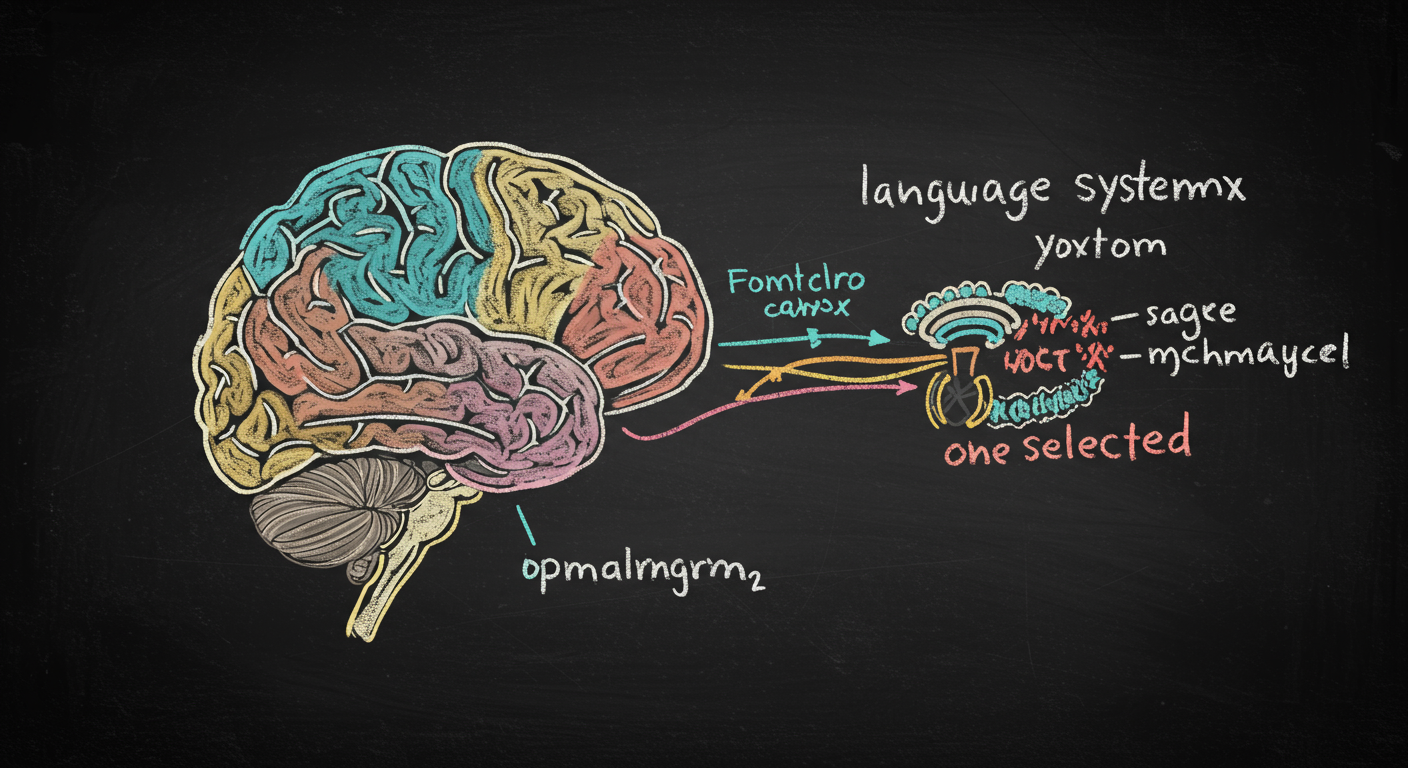
Long-term bilingualism has been associated with differences in brain networks used for language control and executive function.
Researchers have reported changes in both gray matter and white matter, especially in frontal systems involved in selection and inhibition.
The idea of cognitive reserve helps explain the dementia findings. Reserve means the brain can tolerate more pathology before symptoms become obvious.
Bilingualism may add to reserve, along with education, occupational complexity, physical activity, and social engagement.
What the dementia evidence says
A widely cited study by Ellen Bialystok and colleagues in 2007 reported a delay of about 4 to 5 years in dementia diagnosis among bilingual patients.
Later research has not always matched that exact number.
The safest interpretation is that bilingualism may help delay the appearance of symptoms in some people, but it is only one factor among many.
Code-switching: social skill and mental control
Code-switching
Code-switching is the use of two languages within a conversation or utterance.
It can serve several purposes:
- precision
- emphasis
- identity expression
- audience adaptation
- humor or intimacy
It is not random. In many bilingual communities, code-switching follows grammatical and social patterns.
Cognitive and social dimensions
Code-switching reflects both mental control and social intelligence.
A bilingual speaker may switch because one language offers the best word, because the listener expects it, or because the switch itself carries social meaning.
That makes code-switching a useful window into how language and identity work together.
What the science supports, and what it does not
What is supported by the evidence
Supported reasonably well:
- bilinguals practice language control every day
- attention and switching can be more efficient in some tasks
- brain networks involved in control can be shaped by experience
- some studies find later dementia symptom onset
Not supported as a blanket claim:
- bilingualism makes every person smarter in every domain
- bilingualism prevents Alzheimer disease
- every bilingual person gets the same cognitive benefit
Keep going with Slate
Pick up where this left off in your own voice session.