What GLP-1 drugs are and how they work
0:007:19
General

Ozempic, Wegovy, and GLP-1: What You Need to Know

Weight loss is just the beginning. GLP-1 drugs are showing benefits for heart disease, addiction, and depression.

Apr 22, 20267 min listen5 chapters
What you'll learn
  • How GLP-1 receptor agonists work in the body
  • Approved uses vs. off-label applications in 2026
  • Emerging research on addiction, depression, and cardiac benefits
  • Risks, side effects, and the cost debate

What GLP-1 drugs are and how they work

note

Ozempic, Wegovy, and GLP-1: What You Need to Know

Weight loss is just the beginning. GLP-1 drugs are showing benefits for heart disease, addiction, and depression.

note

GLP-1 receptor agonists: the core mechanism

GLP-1 receptor agonists mimic a natural incretin hormone released after meals.

Main actions

  • Increase insulin release when glucose is elevated
  • Lower glucagon secretion
  • Slow gastric emptying
  • Reduce appetite through brain signaling

Why that matters

These drugs treat biology, not motivation. They change how full you feel, how quickly sugar is handled, and how strongly hunger signals fire.

diagram
equation
Appetite reductionlower energy intakeweight loss if intake stays below expenditure\text{Appetite reduction} \rightarrow \text{lower energy intake} \rightarrow \text{weight loss if intake stays below expenditure}
note

Semaglutide by the numbers

Semaglutide is a long-acting GLP-1 receptor agonist with once-weekly dosing.

Common brand forms

  • Ozempic: type 2 diabetes
  • Wegovy: chronic weight management
  • Rybelsus: oral semaglutide for type 2 diabetes

Real-world point

The weekly injection and the slow dose escalation are not cosmetic choices. They help the body adapt and reduce nausea, vomiting, and diarrhea.

Approved uses in 2026 and where off-label use begins

note

Approved uses versus off-label use

Approved uses in the United States, 2026

  • Ozempic: type 2 diabetes; cardiovascular risk reduction in type 2 diabetes with established cardiovascular disease
  • Wegovy: chronic weight management; cardiovascular risk reduction in adults with established cardiovascular disease and obesity or overweight
  • Rybelsus: type 2 diabetes

Off-label use

A clinician may prescribe a medication outside its label. That is common in medicine, but the evidence bar should still be high.

The key question

Does the drug improve a hard outcome, such as heart attacks, hospitalizations, or relapse rates, or only a short-term symptom score?

diagram
chart · bar
Common GLP-1 use categories
Type 2 diabetesChronic weight managementCardiovascular risk reductionOff-label research uses

Weight loss, heart disease, and what the trials actually showed

note

Key trial results

STEP 1, 2021

  • Population: adults with overweight or obesity, without diabetes
  • Duration: 68 weeks
  • Result: about 14.9% mean weight loss with semaglutide 2.4 mg weekly

SELECT, 2023

  • Population: adults with overweight or obesity and established cardiovascular disease, without diabetes
  • Result: 20% relative reduction in major adverse cardiovascular events

Why these trials matter

They show two different outcomes: body-weight change and fewer cardiovascular events. Those are related, but not identical.

diagram
chart · line
Weight loss in STEP 1
BaselineWeek 20Week 40Week 68

Addiction, depression, side effects, and the cost question

note

Emerging research: promising, not settled

Addiction

  • Early evidence suggests reduced alcohol craving and fewer alcohol-related harms
  • Not yet an approved indication

Depression

  • Observational signals exist
  • Not enough evidence for routine depression treatment

Side effects and risks

  • Nausea, vomiting, diarrhea, constipation
  • Gallbladder disease
  • Rare pancreatitis
  • Boxed warning for thyroid C-cell tumors in people with medullary thyroid carcinoma or MEN 2 history

Cost

Brand-name GLP-1 drugs can cost more than $900 per month without insurance in the United States.
diagram
illustration
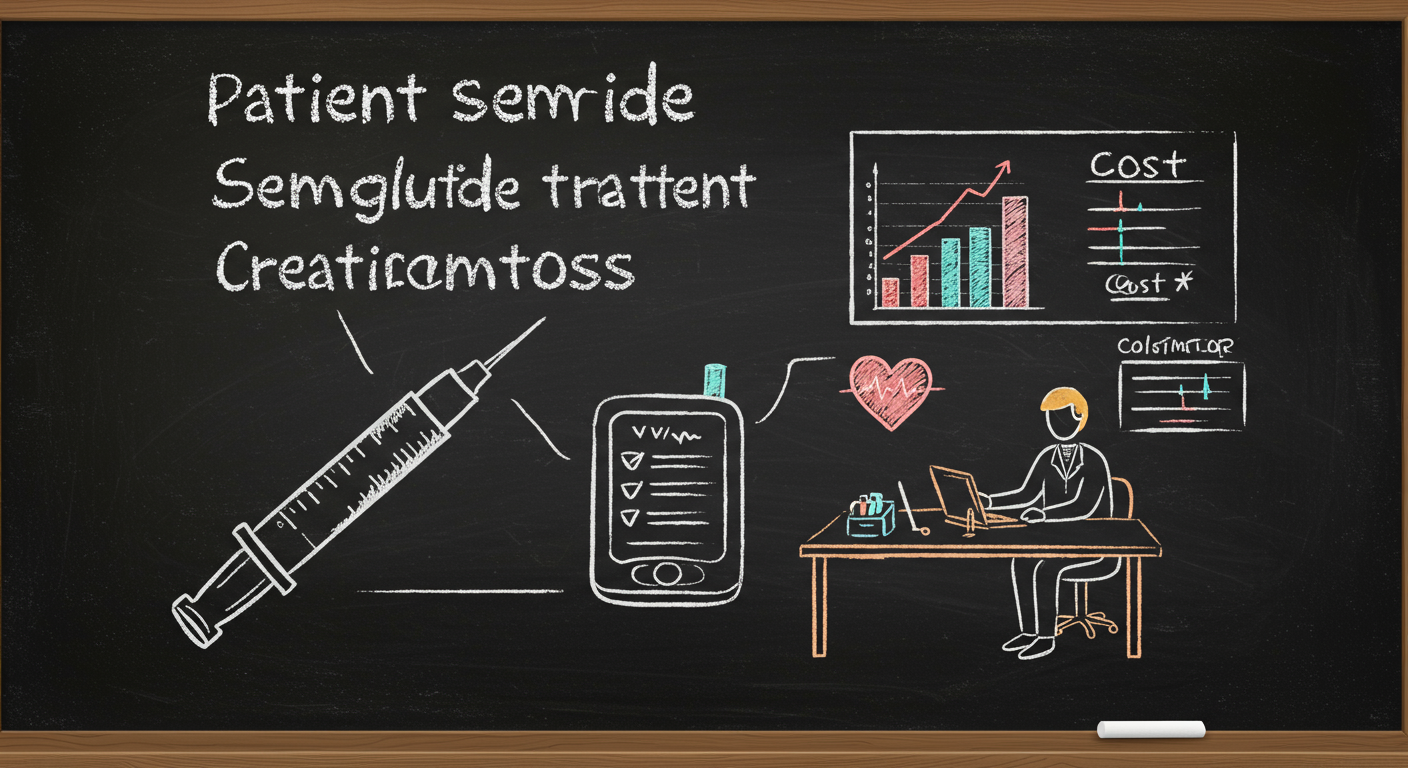
A patient discussing semaglutide treatment with a clinician, showing a weekly injection pen, a heart icon, a stomach icon, and a cost chart on the exam room wall
note

How to think about the tradeoffs

The big question is not whether GLP-1 drugs work. They do. The real question is who benefits enough to justify the side effects, cost, and long-term commitment.

Best candidates

  • People with obesity plus related medical risk
  • People with type 2 diabetes and cardiovascular disease
  • People who can tolerate gradual dose escalation and follow-up

Caution is needed when

  • There is a history of medullary thyroid carcinoma or MEN 2
  • Severe gastrointestinal disease is present
  • The person cannot access the medication consistently

What to remember and how to use the evidence

note

Bottom line

Proven today

  • Lower blood sugar in type 2 diabetes
  • Meaningful weight loss in obesity treatment
  • Cardiovascular risk reduction in selected patients

Promising but not settled

  • Alcohol use disorder
  • Nicotine dependence
  • Depression-related outcomes

Still essential

  • Side effect screening
  • Dose titration
  • Cost and access planning
  • Long-term follow-up
diagram
equation
Benefitharmcost=net value for a specific patient\text{Benefit} - \text{harm} - \text{cost} = \text{net value for a specific patient}
note

Practical takeaway

Ask three questions before starting or discussing a GLP-1 drug:

  • What is the approved indication here?
  • What outcome matters most: weight, glucose, heart risk, or something else?
  • Can the patient tolerate, afford, and continue treatment safely?

Transcript

Welcome to Slate. Today we're looking at Ozempic, Wegovy, and GLP-1: What You Need to Know. We'll cover How GLP-1 receptor agonists work in the body, Approved uses vs. off-label applications in 2026, Emerging research on addiction, depression, and cardiac benefits, and Risks, side effects, and the cost debate. Let's get into it.

Ozempic and Wegovy are brand names for semaglutide. Semaglutide is a GLP-1 receptor agonist. That means it copies a hormone your gut already makes after you eat. The hormone is called glucagon-like peptide-1, or G-L-P-1. On the visual here, notice the chain from food to gut to brain and pancreas. That chain matters, because these drugs work in several places at once. First, they slow stomach emptying. Food leaves the stomach more slowly, so you feel full longer. Think of a sink with the drain partly closed. Water still goes down, but more slowly. Second, they act on the brain’s appetite centers, especially in the hypothalamus, to reduce hunger and food noise. Third, they help the pancreas release more insulin when blood sugar is high, and they reduce glucagon, a hormone that raises blood sugar. That is why semaglutide was first developed for type 2 diabetes. Semaglutide is not insulin. It does not force glucose down regardless of context. It works in a glucose-dependent way, which lowers the risk of hypoglycemia compared with insulin or sulfonylureas. The key idea is that these drugs change the body’s satiety and sugar signaling, not willpower. That is why the effects can be so strong, and why side effects like nausea are so common at the start.

The approved uses are narrower than the headlines suggest. Ozempic is approved in the United States for adults with type 2 diabetes, and it also has cardiovascular risk reduction for adults with type 2 diabetes and established cardiovascular disease. Wegovy is approved for chronic weight management in adults with obesity or overweight plus at least one weight-related condition, and it also has cardiovascular risk reduction in adults with established cardiovascular disease and either obesity or overweight. The exact labels have expanded over time, so clinicians check the current package insert, not social media. Here’s the clean dividing line. Approved use means the Food and Drug Administration, or F-D-A, has reviewed evidence for that specific dose and indication. Off-label use means a clinician prescribes a drug for a purpose not on the label. That is legal in the United States, but the evidence can be weaker. For GLP-1 drugs, off-label use has included prediabetes, polycystic ovary syndrome, alcohol use disorder, nicotine dependence, and depression symptoms. Some of these uses are being studied seriously. Others are still early. The difference between a promising signal and a standard treatment is usually a randomized controlled trial with enough people, enough time, and a meaningful outcome. A small improvement in a rating scale is not the same as fewer heart attacks or fewer overdoses.

The weight-loss data are strong, and the heart data are now strong too. In the STEP 1 trial, published in 2021, adults without diabetes who received 2.4 milligrams of semaglutide weekly lost about 14.9 percent of body weight over 68 weeks, compared with about 2.4 percent with placebo. That is a large effect for a medication. But the real story is that the benefits do not stop at the scale. In the SELECT trial, published in 2023, semaglutide 2.4 milligrams reduced major adverse cardiovascular events by 20 percent in people with overweight or obesity and established cardiovascular disease, but without diabetes. That means fewer heart attacks, fewer strokes, and fewer cardiovascular deaths. This is a major shift. It shows that obesity treatment can lower risk, not just shrink waistlines. The visual here shows the difference between symptom improvement and event reduction. A drug that helps someone eat less is useful. A drug that also lowers the chance of a heart attack is in a different category. That is why cardiologists, endocrinologists, and primary care clinicians are all paying close attention. The best evidence now supports GLP-1 drugs as metabolic and cardiovascular therapies, not only weight-loss drugs.

The most interesting research now is beyond weight. Early studies suggest GLP-1 drugs may reduce alcohol craving and possibly other addictive behaviors. In 2023, a Danish nationwide study in JAMA Psychiatry reported that people with alcohol use disorder who were taking GLP-1 receptor agonists had fewer alcohol-related hospitalizations than those taking some other diabetes medications. That is not the same as proving a treatment for addiction, but it is a real signal. Depression is more complicated. Some observational studies have reported fewer psychiatric symptoms or lower rates of depression-related outcomes, but that evidence is not yet strong enough to treat depression with semaglutide. The brain effects are plausible, but psychiatry needs careful trials with clear endpoints and safety monitoring. The side effects are not minor. Nausea, vomiting, diarrhea, constipation, and abdominal pain are the most common. Gallbladder disease and pancreatitis are important concerns, though pancreatitis is uncommon. There is also a boxed warning for thyroid C-cell tumors based on rodent studies, so these drugs are avoided in people with a personal or family history of medullary thyroid carcinoma or MEN 2. Cost is another barrier. Without insurance, monthly prices in the United States can exceed 900 dollars for brand-name products. That makes access, prior authorization, and long-term adherence part of the medical story.

Here is the clean summary. GLP-1 receptor agonists imitate a gut hormone that helps regulate appetite and blood sugar. Semaglutide is the best-known example, sold as Ozempic, Wegovy, and Rybelsus depending on the dose and indication. The strongest evidence is for type 2 diabetes, chronic weight management, and cardiovascular risk reduction in selected patients. The newer story is bigger than weight loss. We now have hard cardiovascular outcome data, especially from SELECT in 2023. We also have early but incomplete signals in addiction and mood disorders. Those signals are interesting, but they are not the same as approval. The visual on this final panel should help you sort the claims into three buckets. First, proven today. Second, promising but still under study. Third, not supported well enough for routine use. That habit keeps you from overselling the drug and from missing its real value. If you remember one thing, remember this: GLP-1 drugs are not just appetite suppressants. They are metabolic medicines with growing evidence for organ protection. The science is moving fast, but the standard for proof has not changed. Good medicine still asks the same question: does this help patients live longer, feel better, or avoid disease in a way that matters?

XLinkedInWhatsApp

Keep going with Slate

Pick up where this left off in your own voice session.

Built with Slate