How to Spot Misleading Statistics
Charts lie, averages deceive, and headlines cherry-pick. Learn to see through the numbers that shape public opinion.
- How to spot misleading charts and statistics
- Base rates, selection bias, and survivorship bias
- Reading scientific studies without a PhD
- Making better personal decisions with data
1. The first question: what exactly is being measured?
How to Spot Misleading Statistics
Charts lie, averages deceive, and headlines cherry-pick. Learn to see through the numbers that shape public opinion.
What a statistic leaves out
A statistic can be true and still mislead if it hides the denominator, the time frame, or the comparison group.
Three questions to ask first
What was counted?
Out of how many?
Compared with which baseline?
Example
A report that says “hospitalizations rose 30%” means something very different if the count went from 10 to 13 than if it went from 1,000 to 1,300.
Raw counts versus rates
Raw counts answer “how many.” Rates answer “how common.”
If one county has 2 deaths and another has 20 deaths, the second sounds worse. But if the first county has 1,000 people and the second has 200,000 people, the rate is 200 per 100,000 in the small county and 10 per 100,000 in the large county.
That is why public health often uses rates per 100,000 people, and why sports stats use per-game averages.
2. Charts can distort without changing a single data point
Common chart tricks
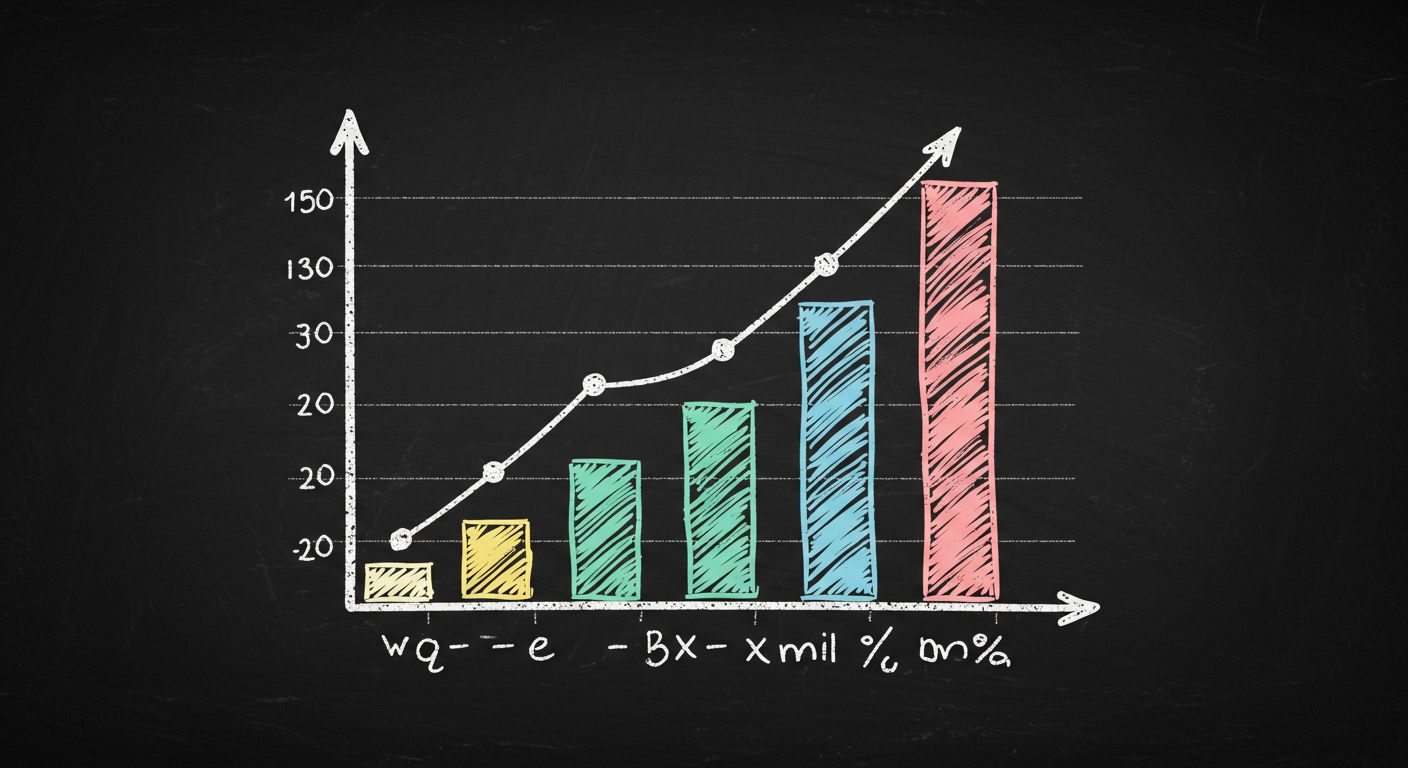
Truncated y-axes can exaggerate small differences.
Dual-axis charts can make unrelated trends look connected.
3D effects can hide the true size of bars or slices.
The rule of thumb
If the chart is making a strong claim, inspect the axis first.
Why zero matters for bars
Bar charts encode quantity by length. Length is only easy to compare when the baseline is fixed.
If the baseline is not zero, the visual exaggerates. A 4-unit increase from 98 to 102 looks huge if the bars start at 90, but the true change is about 4.1%.
Line charts are different. For trends over time, a nonzero baseline can be acceptable if it is clearly labeled. The problem is not every cropped axis. The problem is hidden cropping.
3. Averages can hide the real story
Mean, median, mode
Mean: sum of values divided by number of values.
Median: the middle value after sorting.
Mode: the most frequent value.
When the median is better
Use the median when the data are skewed or when outliers are extreme.
Use the mean when every value should count proportionally, such as in total cost calculations.
4. Correlation is not causation, and base rates matter
Correlation versus causation
Correlation says two variables move together.
Causation says one variable changes the other.
A third factor can cause both, or the relationship can run in the opposite direction.
Base rate
The base rate is the underlying frequency of a condition in the population.
A numerical example
Out of 10,000 people, 100 have the disease.
A 99% sensitive test finds about 99 of those 100.
A 99% specific test wrongly flags about 99 of the 9,900 healthy people.
So 198 people test positive, but only 99 actually have the disease. That is about 50%.
Why this matters
A positive result is not the same as a 99% chance of being sick. The base rate changes the meaning of the test.
5. Spotting bias in studies and in your own decisions
Selection bias
Selection bias happens when the sample is not representative of the population.
Survivorship bias
Survivorship bias happens when you only see the winners, the finishers, or the survivors.
Read a study like a detective
Who was studied?
Was there a control group?
Was the sample randomized?
How big was the effect, not just whether it was statistically significant?
Better habits for everyday decisions
Ask for absolute risk, not only relative risk.
Ask how many people were included, not just whether the result was statistically significant.
Look for the comparison group.
Prefer numbers that are easy to verify from the original source.
Final test
If a number changes your mind, make sure you know why it changed your mind.
Keep going with Slate
Pick up where this left off in your own voice session.