How Does the Stock Market Actually Work?
Exchanges, market makers, order books, and price discovery — what happens in the milliseconds after you click 'buy'.
- How stock exchanges match buyers and sellers
- Market makers, bid-ask spreads, and price discovery
- Why stock prices move: earnings, sentiment, and momentum
- Index funds, ETFs, and how most people should invest
1. What a stock actually is
How Does the Stock Market Actually Work?
Exchanges, market makers, order books, and price discovery — what happens in the milliseconds after you click 'buy'.
What a stock is
A stock is an equity security. It represents partial ownership in a corporation.
Two different markets
| Market | What happens | Who gets the money |
|---|---|---|
| Primary market | New shares are sold in an IPO or follow-on offering | The company |
| Secondary market | Investors trade existing shares | The seller |
Why price is not the same as value
A stock price is one share’s market price. A company’s market capitalization is share price multiplied by shares outstanding.
Example
If a company has 100 million shares and each share trades at 50 dollars, its market cap is 5 billion dollars.
Why this matters for beginners
If you understand that most trading is investor-to-investor, the rest of the market starts to make sense. Prices move because buyers and sellers constantly revise what they think a share is worth.
2. What happens after you click buy
Order types
A market order prioritizes speed.
A limit order prioritizes price.
Order book terms
| Term | Meaning |
|---|---|
| Bid | Best price buyers are offering |
| Ask | Best price sellers are asking |
| Spread | Ask minus bid |
| Liquidity | How easily you can trade without moving price much |
| Slippage | The difference between expected price and fill price |
Worked example
If the best ask is 100.00 dollars and only 40 shares are offered there, a 100-share market buy may fill part at 100.00, then the rest at 100.01 or 100.02. That is why fast execution does not always mean one exact price.
Why a limit order can save money
A limit order protects your price, but it may not fill. That tradeoff is the heart of order execution.
3. Market makers and price discovery
Market makers do three jobs
They quote prices.
They provide liquidity.
They absorb temporary order imbalance.
Why spreads exist
The spread pays for inventory risk, adverse selection, and trading costs. If a market maker buys shares from you right before bad news hits, the inventory can lose value fast.
Real-world intuition
A very liquid mega-cap stock may trade with a one-cent spread. A thinly traded stock can show a spread of 20 cents, 50 cents, or more. Wider spreads mean higher trading costs for ordinary investors.
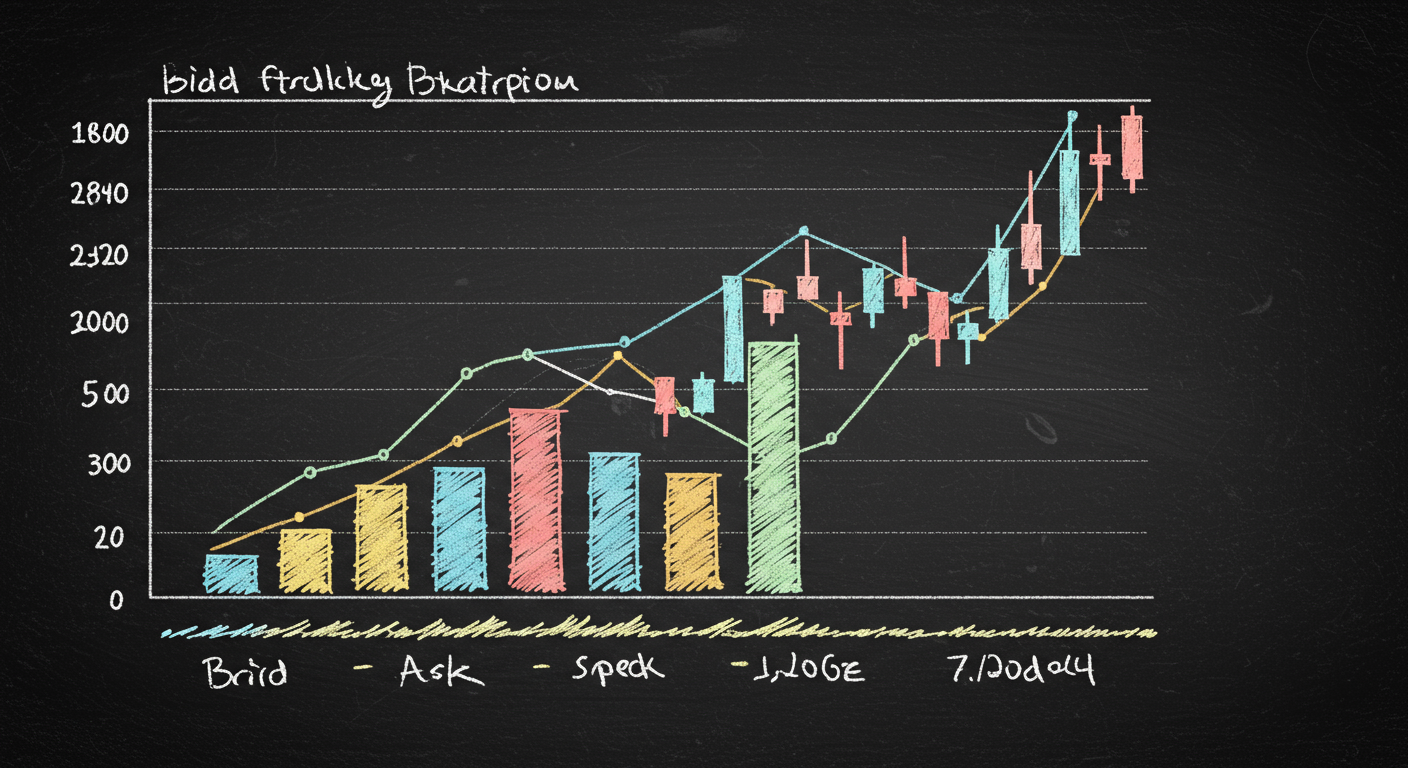
The mid price is not always the trade price
The midpoint is a reference point. Your actual fill depends on the order you send and the liquidity available when it reaches the market.
4. Why stock prices move
Main drivers of price
Earnings and guidance change the cash-flow story.
Interest rates change the discount rate.
Sentiment changes how aggressively people buy or sell.
Momentum can amplify moves after the first push.
A useful analogy
Think of price like the temperature in a crowded room. Earnings are the thermostat. Sentiment is the number of people moving around. Rates are the outside weather. All three affect what the room feels like right now.
Why valuation is hard
A stock can rise even if the company is not profitable yet, if investors expect much higher future cash flows. The reverse is also true: a profitable company can trade poorly if growth slows or risk rises.
5. How most people should invest
Index funds vs individual stocks
| Feature | Index fund or ETF | Individual stock |
|---|---|---|
| Diversification | High | Low |
| Research needed | Low | High |
| Cost | Usually low | Trading costs can add up |
| Upside and downside | Market-like | Can be extreme |
Simple investing rule
If you do not have a strong reason to pick individual stocks, a broad index fund is often the cleaner choice.
What to watch first
Expense ratio.
Tax efficiency.
Tracking error.
Liquidity for the ETF you choose.
Final mental model
You click buy. The broker routes the order. The exchange or wholesaler matches it. Market makers narrow the gap between buyers and sellers. Prices move as new information changes expectations. And for most investors, the smartest move is usually to own a broad slice of the market and let time do the heavy lifting.
Keep going with Slate
Pick up where this left off in your own voice session.