How Does the Federal Reserve Work?
Interest rates, money supply, and quantitative easing — the most powerful institution you never voted for, explained.
- The Fed's dual mandate: maximum employment and stable prices
- How raising and lowering interest rates affects the economy
- Quantitative easing and tightening in plain language
- Why Fed decisions move markets, mortgages, and your savings account
What the Federal Reserve actually is
How Does the Federal Reserve Work?
Interest rates, money supply, and quantitative easing — the most powerful institution you never voted for, explained.
The Federal Reserve in one sentence
The Federal Reserve is the U.S. central bank that uses monetary policy to support maximum employment and stable prices.
The Fed system
- Board of Governors in Washington, D.C.
- 12 regional Federal Reserve Banks
- Federal Open Market Committee, or FOMC
Why it exists
The Fed was created in 1913 to reduce banking panics and make the financial system more stable.
Dual mandate
- Maximum employment
- Stable prices
The Fed does not directly control jobs or inflation. It influences the cost of borrowing, which then affects spending, hiring, and prices.
What the Fed does not do
It does not set your grocery bill directly. It does not control oil prices. It does not decide how much rent landlords charge. It works through financial conditions, and those conditions then ripple outward.
Analogy
A thermostat changes the temperature setting. The furnace and air conditioner do the actual heating and cooling. The Fed works the same way: it changes the financial setting, and the economy responds through banks, lenders, households, and businesses.
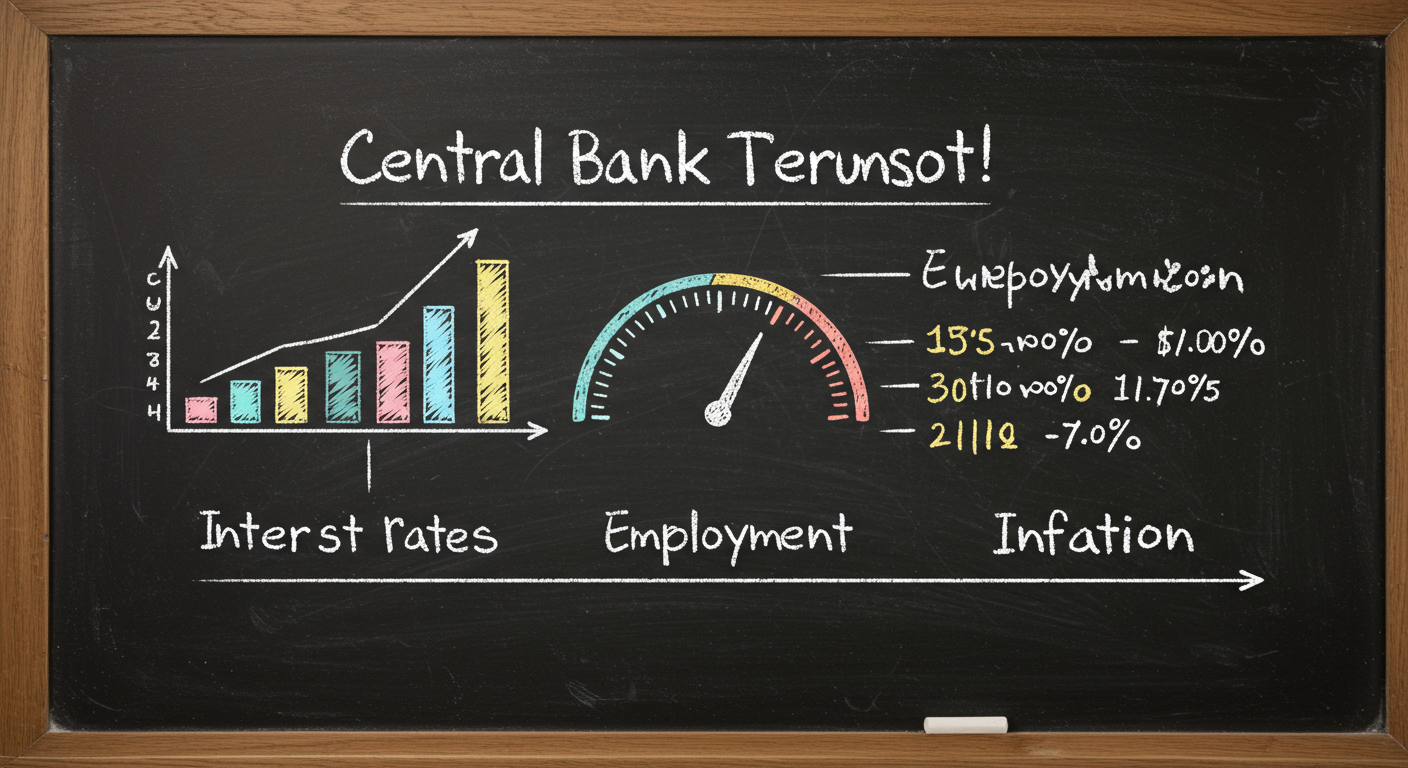
How interest rate moves spread through the economy
The federal funds rate
The federal funds rate is the overnight interest rate banks charge each other for reserve balances.
How a rate hike works
- Short-term borrowing gets more expensive
- Variable-rate debt adjusts quickly
- Businesses face higher financing costs
- Demand slows
- Inflation pressure usually eases after a lag
How a rate cut works
- Borrowing gets cheaper
- Consumers and businesses spend more
- Hiring can improve
- Inflation can rise if demand gets too strong
Real-world effect
A 0.25 percentage point Fed move sounds small. On a $400,000 mortgage or a large business loan, that small change can mean thousands of dollars over time.
Why markets react before the meeting ends
Financial markets are forward-looking. Traders try to price the next move before it happens. That is why a Fed statement, a press conference, or one line in the FOMC minutes can move stocks, bonds, and the dollar in seconds.
Analogy
Interest rates are like the price of water coming into a city. If the price rises, people use less. If the price falls, usage increases. The pipes are the banking system, and the flow is credit.
Quantitative easing and tightening, in plain language
Quantitative easing
Quantitative easing, or QE, means the Fed buys longer-term securities to push down longer-term rates and support credit markets.
Quantitative tightening
Quantitative tightening, or QT, means the Fed reduces its holdings over time, usually by letting securities mature without reinvesting all of the proceeds.
Why QE exists
QE is used when the Fed wants more stimulus but the policy rate is already very low.
Key idea
QE affects the size and composition of the Fed’s balance sheet. It is not the same as printing cash for government spending.
What the Fed bought in QE
The Fed mostly bought U.S. Treasury securities and agency mortgage-backed securities.
What happened in QT
Since 2022, the Fed has been reducing its balance sheet after the huge expansion during the pandemic. That is meant to remove some of the extra support added earlier.
Analogy
If the policy rate is the volume knob, QE and QT are the size of the speaker system. Both matter, but they work differently.
Why Fed decisions hit mortgages, savings, stocks, and the dollar
Where Fed policy shows up
- Mortgages
- Auto loans
- Credit cards
- Savings accounts
- Corporate bonds
- Stock prices
- The U.S. dollar
Why stocks react
Higher interest rates raise the discount rate used to value future profits. That can pull stock prices down, especially for companies whose profits are expected far in the future.
Why savings rates lag
Banks often raise deposit rates slowly. They do not always pass Fed hikes through one-for-one.
Real-world numbers
The federal funds rate moved from near zero in March 2022 to a target range of 5.25% to 5.50% by July 2023, the highest in more than 20 years. That shift was one reason borrowing costs rose across the economy.
A useful way to think about it
The Fed does not push one button and get one result. It changes the cost of borrowing, and millions of private decisions do the rest.
That is why the same rate hike can cool inflation, slow hiring, lift savings yields, and pressure stock prices all at once.
How Fed decisions are made and what to watch next
What the Fed watches
- PCE inflation
- Core PCE inflation
- Unemployment rate
- Payroll growth
- Job openings
- Wage growth
- Financial conditions
- Inflation expectations
The 2 percent target
The Federal Reserve’s long-run inflation goal is 2 percent, measured by the annual change in the PCE price index.
What to read after a meeting
- FOMC statement
- Press conference
- Summary of Economic Projections
- Dot plot
The big takeaway
The Fed responds to the economy, and then the economy responds to the Fed.
Final mental model
The Fed is a brake and an accelerator for the economy. It uses interest rates for the day-to-day speed control, and balance-sheet tools like QE and QT when it needs a stronger push.
If you understand the dual mandate, the policy rate, and the balance sheet, you can read Fed headlines with much more confidence.
Keep going with Slate
Pick up where this left off in your own voice session.