Meditation and the brain: what changes, and what does not
0:006:34
General

How Does Meditation Change Your Brain?

Neuroplasticity, cortisol reduction, and the default mode network — what 10 minutes of meditation actually does, according to science.

Apr 22, 20267 min listen5 chapters
What you'll learn
  • Structural brain changes observed in regular meditators
  • The default mode network and why quieting it reduces anxiety
  • Cortisol, inflammation, and the stress-reduction pathway
  • How much meditation you actually need (hint: less than you think)

Meditation and the brain: what changes, and what does not

note

How Does Meditation Change Your Brain?

Neuroplasticity, cortisol reduction, and the default mode network — what 10 minutes of meditation actually does, according to science.

note

Meditation and neuroplasticity

Meditation works through neuroplasticity: the brain’s ability to change its connections and activity patterns with experience.

What researchers have observed

  • Cortical thickness changes in some studies of long-term meditators
  • Hippocampus: involved in memory and stress regulation
  • Prefrontal cortex: involved in attention and self-control
  • Anterior cingulate cortex: involved in monitoring conflict and redirecting attention

Important caution

A single meditation session can change state. It does not usually create the structural changes seen in long-term practice.

Think of it like learning a language. Ten minutes can help you recall a word. Years of use change how fluently the language lives in your brain.

diagram
equation
Δbrain structurepractice×consistency×time\Delta \text{brain structure} \propto \text{practice} \times \text{consistency} \times \text{time}
note

What a 10-minute session can do

A short session can:

  • reduce immediate stress arousal
  • improve attention for the next task
  • make it easier to notice distraction
  • lower reactivity to thoughts and sensations

A short session usually cannot:

  • permanently rewire the brain in one sitting
  • erase anxiety disorders on its own
  • replace sleep, exercise, or therapy

The default mode network and the quieting of self-talk

note

Default mode network, or DMN

The default mode network is a set of brain regions that becomes active when attention is turned inward.

Common functions

  • self-referential thinking
  • remembering the past
  • imagining the future
  • mind wandering

Why this matters for anxiety

When the DMN becomes overactive or hard to disengage from, thoughts can loop. Meditation trains attention so you notice the loop earlier and return to the present.

Key idea

Meditation does not stop thought. It changes your relationship to thought.

diagram
chart · line
Mind wandering during a session
Start2 min5 min8 minEnd
note

The useful analogy

The DMN is like a browser with many tabs open in the background. Meditation does not uninstall the browser. It helps you notice which tab is loudly playing audio, then choose the tab you actually need.

Cortisol, inflammation, and the stress pathway

note

Cortisol and the HPA axis

The stress response follows a clear pathway:

  1. A challenge is perceived
  2. The hypothalamus signals the pituitary
  3. The adrenal glands release cortisol
  4. The body prepares to respond

What meditation may improve

  • lower resting stress reactivity
  • faster recovery after stress
  • better emotion regulation
  • possible reductions in some inflammatory markers

What the evidence says

A 2013 meta-analysis in JAMA Internal Medicine found mindfulness meditation programs produced small to moderate improvements in anxiety, depression, and pain.

diagram
equation
Stress response=threat detection+cortisol release+recovery time\text{Stress response} = \text{threat detection} + \text{cortisol release} + \text{recovery time}
note

Why inflammation shows up in this conversation

Chronic stress can push the immune system toward a more inflammatory state. Meditation may help mainly by reducing repeated stress activation, not by acting like a direct anti-inflammatory drug.

That difference matters. The effect is usually modest, cumulative, and strongest when meditation is part of a broader routine.

How much meditation you need, and what the evidence really supports

note

How much meditation is enough?

For immediate effects

  • 5 to 10 minutes can reduce tension and sharpen attention
  • one session can change your state right away

For longer-term effects

  • consistency matters more than intensity
  • many studies use daily practice over weeks
  • structural brain changes usually require repeated practice over time

Practical rule

Start with 10 minutes a day. If that is sustainable, it is better than an ambitious plan you abandon in a week.
illustration
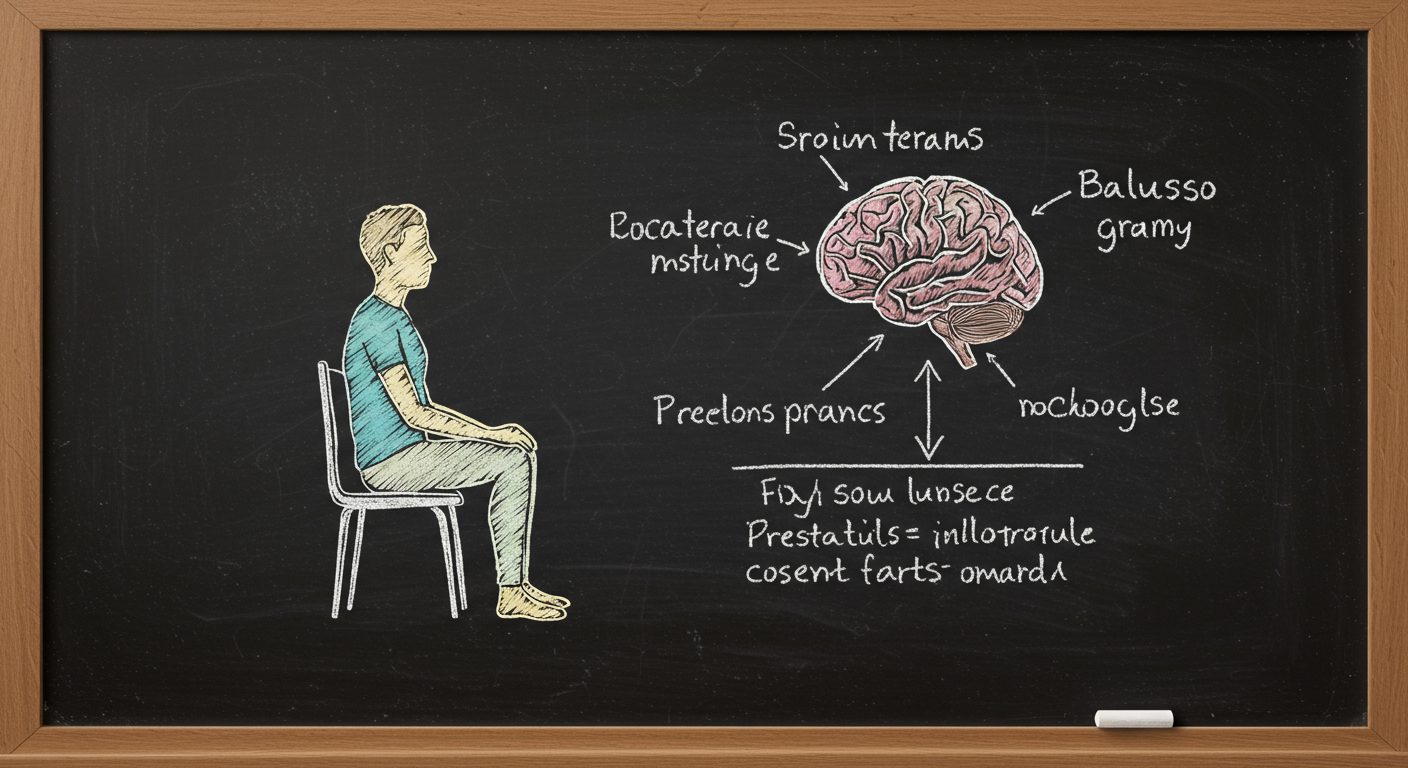
A person sitting quietly on a chair focusing on their breath with a simple brain and stress pathway diagram beside them
diagram
chart · bar
Typical meditation practice doses
Single sessionCommon app sessionResearch program sessionWeekly program length

What to remember: a precise model of meditation benefits

note

Meditation benefits in one model

1. State changes

Immediate calming, less reactivity, better focus.

2. Skill changes

Improved attention control and awareness of distraction.

3. Trait changes

With regular practice, some studies find changes in brain structure and connectivity.

Best-supported takeaway

Meditation is a training method for attention and stress recovery. Its effects are real, but they are gradual and depend on repetition.

diagram
note

When meditation helps most

  • when practice is regular
  • when the goal is stress reduction, not instant perfection
  • when it is paired with sleep, movement, and support when needed

Bottom line

Ten minutes is enough to begin changing how your brain handles attention and stress. Longer-term changes come from making that ten minutes repeat.

Transcript

Welcome to Slate. Today we're looking at How Does Meditation Change Your Brain?. We'll cover Structural brain changes observed in regular meditators, The default mode network and why quieting it reduces anxiety, Cortisol, inflammation, and the stress-reduction pathway, and How much meditation you actually need (hint: less than you think). Let's get into it.

Meditation is not a magic reset button. It is a repeated mental workout. The brain changes in response to repeated practice, the same way a pianist’s hands and auditory circuits change after months of scales. In meditation research, the clearest pattern is not instant transformation. It is gradual adaptation. Studies using magnetic resonance imaging, or M-R-I, have found differences in brain structure in regular meditators, especially in regions linked to attention, body awareness, and self-regulation. One well-known 2011 study by Sara Lazar and colleagues at Harvard reported increased cortical thickness in the hippocampus and in parts of the prefrontal cortex in experienced meditators. Those areas help with memory, learning, and executive control. But the key word is experienced. These are not effects from a single session. They appear after repeated practice over time. The diagram on screen separates acute effects from long-term changes. That distinction matters. A single 10-minute session may calm your body and shift attention, but structural brain changes come from repetition, like grooves forming in soft clay. The brain is always changing. Meditation gives it a very specific pattern to repeat.

Here is the network scientists talk about most often: the default mode network, or D-M-N. It includes areas such as the medial prefrontal cortex and posterior cingulate cortex. The D-M-N is active when the mind is not focused on a task. It supports self-referential thinking, memory, and mental time travel. That is useful. It helps you plan, imagine, and reflect. But when it runs too loudly, it can feed rumination. Rumination is the loop of repeating worries, regrets, and stories about the self. In anxiety and depression, that loop can become sticky. Meditation does not delete the D-M-N. It helps you notice when the mind has drifted and return attention to an anchor, such as the breath. That repeated return is the training. In brain-imaging studies, experienced meditators often show altered activity or connectivity in default mode regions during meditation. The practical effect is simple to feel. Thoughts still appear. They just do not pull you as hard. It is like hearing background traffic from a room with a closed window instead of standing on the sidewalk. The noise is still there, but it is less controlling.

Stress starts in the body before it becomes a story in the mind. When the brain detects threat, the hypothalamus triggers the H-P-A axis, short for hypothalamic-pituitary-adrenal axis. That leads to cortisol release from the adrenal glands. Cortisol is not bad. It helps mobilize energy and sharpen attention in the short term. The problem is chronic elevation or poor regulation. Over time, persistent stress signaling can disturb sleep, raise blood pressure, and affect immune function. Meditation appears to influence this pathway by reducing physiological arousal and improving stress recovery. In a 2013 meta-analysis by Madhav Goyal and colleagues in JAMA Internal Medicine, mindfulness meditation programs showed small to moderate improvements in anxiety, depression, and pain. That does not prove every pathway, but it matches the biology. Some studies also report changes in inflammatory markers, including reductions in C-reactive protein in certain groups, though results vary by population and practice style. The most reliable takeaway is not that meditation blocks stress forever. It helps the body come down after stress more efficiently. Think of it like easing off the gas pedal before the engine overheats. The stress response still exists. Meditation helps the brake system work better.

The most common question is also the most practical one: how much is enough? A 10-minute daily practice is a realistic starting point. In research, many mindfulness programs use longer sessions, often around 20 to 45 minutes a day, with weekly classes over eight weeks. But benefits do not require perfection. Even brief practice can improve attention and reduce stress in the moment. A 2021 randomized clinical trial led by Judson Brewer found that a 10-minute app-based meditation practice reduced anxiety more than a matched control condition in adults with moderate anxiety. That does not mean 10 minutes cures anxiety disorders. It means short, consistent practice can matter. The dose-response pattern looks more like brushing your teeth than taking a single dramatic treatment. Small amounts done regularly beat rare heroic efforts. The image on screen shows a simple practice loop: sit, notice the breath, drift, return. That return is the rep. If you want the brain changes, the repetition is the point. If you want a calmer next hour, even one short session can help. If you want durable change, the habit has to survive ordinary life, not just perfect conditions.

The cleanest way to think about meditation is in three layers. First, it changes state. In minutes, you may feel less reactive and more settled. Second, it trains attention. Each time you notice distraction and return, you strengthen control circuits. Third, with regular practice, it may support structural and functional brain changes in networks involved in self-regulation, including the prefrontal cortex, hippocampus, and default mode network. None of this means meditation is superior to every other tool. Exercise also lowers stress and supports brain health. Sleep does too. Therapy can be essential. Meditation is one tool with a strong evidence base for stress reduction and attention training. The science is strongest when the claim is modest: it helps the brain practice returning. That simple skill can reduce rumination, soften stress responses, and make attention less fragile. If you remember one sentence from the whole lesson, make it this one: meditation does not empty the mind. It teaches the mind to come back. That return, repeated over days and weeks, is where the biology changes.

XLinkedInWhatsApp

Keep going with Slate

Pick up where this left off in your own voice session.

Built with Slate