How Do Electric Cars Actually Work?
Battery chemistry, regenerative braking, and charging — the real engineering behind EVs, beyond the marketing.
- EV drivetrain vs. internal combustion — the key differences
- Battery chemistry and why it determines range and lifespan
- Regenerative braking and energy recovery
- Charging infrastructure and the V2G future
1. What an electric car is actually doing
How Do Electric Cars Actually Work?
Battery chemistry, regenerative braking, and charging — the real engineering behind EVs, beyond the marketing.
Electric vehicle drivetrain basics
An EV uses a battery pack, power electronics, an electric motor, and a reduction gear.
EV vs internal combustion engine
- Battery electric vehicles store energy in chemical form and use an electric motor to make torque.
- Gasoline cars burn fuel in cylinders and convert heat into motion.
- EV motors can deliver maximum torque from zero rpm, which is why they feel quick off the line.
- EV drivetrains usually have fewer moving parts than internal combustion drivetrains.
Why efficiency is higher
A battery electric drivetrain often reaches 77 to 90 percent tank-to-wheel efficiency. A gasoline drivetrain is often around 20 to 30 percent efficient at turning fuel energy into wheel motion.
The key idea
An electric car is not a gasoline car with the engine replaced. It is a different energy system.
2. Battery chemistry sets range and lifespan
Lithium-ion battery chemistries in EVs
Most modern EVs use lithium-ion batteries. Two important chemistries are:
- NMC, nickel manganese cobalt
- LFP, lithium iron phosphate
Why chemistry changes the car
| Chemistry | Strengths | Tradeoffs |
|---|---|---|
| NMC | Higher energy density, strong range for the same pack size | More expensive materials, more thermal sensitivity |
| LFP | Long cycle life, strong thermal stability, lower cost | Lower energy density, usually heavier for the same range |
What range really depends on
Range is not just battery size. It also depends on:
- vehicle mass and aerodynamics
- motor and inverter efficiency
- tire rolling resistance
- temperature
- driving speed and stop-and-go traffic
Battery management system
The battery management system keeps cells within safe voltage, current, and temperature limits. It also balances cells so one weak cell does not limit the whole pack.
3. Regenerative braking turns motion back into electricity
Regenerative braking explained
Regenerative braking converts kinetic energy back into electrical energy.
What happens in the drivetrain
- The driver lifts off the accelerator or presses the brake.
- The motor switches into generator mode.
- Electrical energy flows back through the inverter.
- The battery stores part of that energy.
What limits regeneration
- a full battery cannot absorb much more energy
- cold batteries charge more slowly
- low speeds produce less recoverable energy
- hard braking still needs friction brakes
Why it matters
Regeneration improves efficiency, reduces brake wear, and makes city driving especially favorable for EVs.
4. Charging is power delivery, not just plugging in
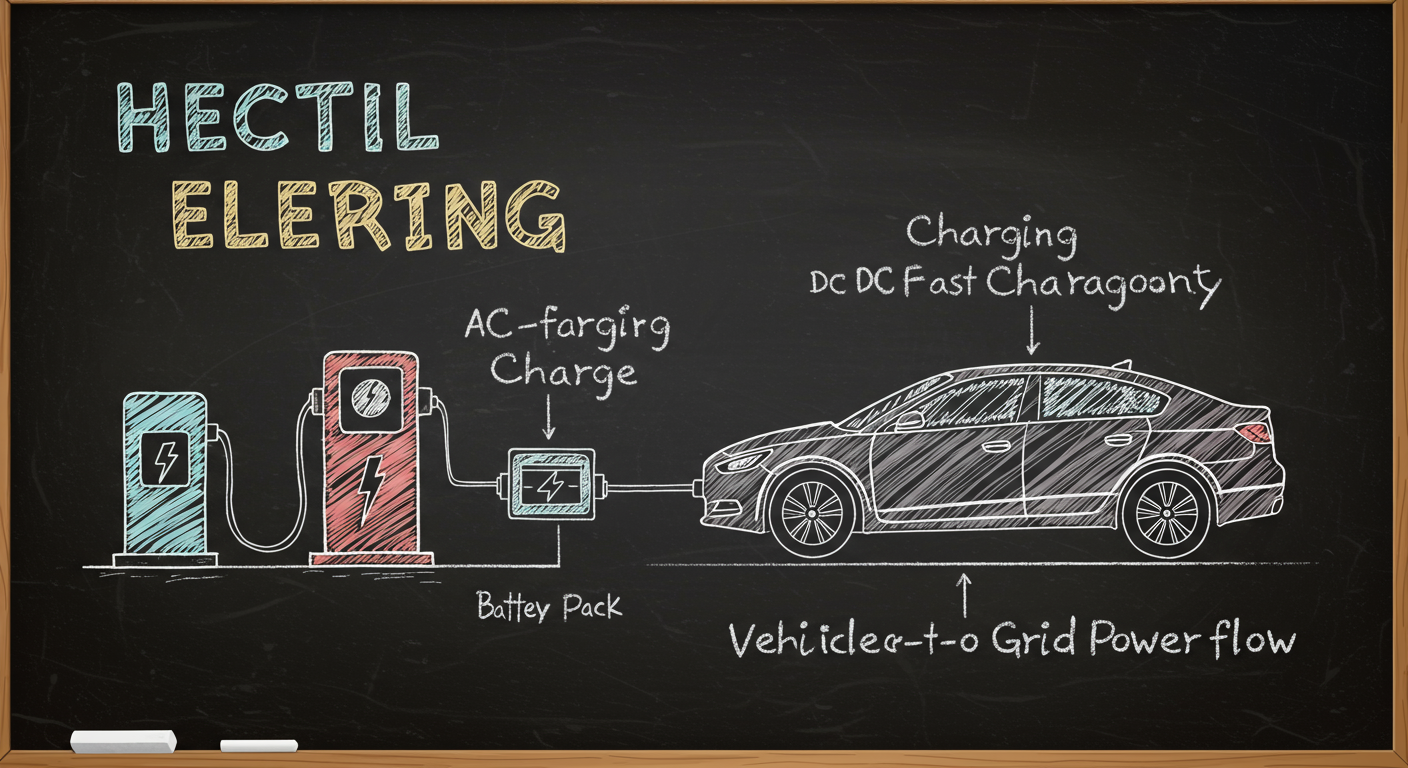
AC charging vs DC fast charging
AC charging
The car converts alternating current to direct current using its onboard charger. This is common at home and at workplaces.
DC fast charging
The station converts power outside the car and sends direct current directly to the battery. This is used on highways and for quick top-ups.
Typical charging behavior
Charging is fastest at lower state of charge and slows as the battery approaches full. This taper helps protect cell chemistry.
Real-world numbers
- Level 2 charging in the U.S. often uses 240 volts
- Many cars add about 20 to 40 miles of range per hour on Level 2
- DC fast charging can add much more, but only until taper begins
Vehicle-to-grid
Vehicle-to-grid, or V2G, lets a parked EV export power back to the grid when rules and hardware allow it.
5. What engineers optimize in a real EV
The engineering tradeoffs in EV design
EV design is a systems problem. Engineers balance:
- range
- cost
- weight
- charging speed
- thermal safety
- battery lifespan
- cabin and battery heating in cold weather
Why aerodynamics matter
At highway speed, air drag is a major energy loss. A more streamlined body can improve range without increasing battery size.
Why software matters
The battery management system, thermal control, and route planning software can change real-world range and charging time by a large amount.
Best chemistry depends on use case
- LFP is often attractive for lower cost and long cycle life
- NMC is often attractive when high energy density is the priority
Keep going with Slate
Pick up where this left off in your own voice session.