How Cities Are Adapting to Climate Change
Flood barriers, heat-resistant design, and nature-based solutions — the engineering of climate resilience.
- The difference between climate mitigation and adaptation
- Nature-based solutions that actually work
- How cities are engineering flood and heat resilience
- Technologies helping communities prepare for extremes
Mitigation and adaptation are not the same job
How Cities Are Adapting to Climate Change
Flood barriers, heat-resistant design, and nature-based solutions — the engineering of climate resilience.
Climate mitigation vs climate adaptation
Climate mitigation addresses the source of climate change by reducing greenhouse gas emissions.
Climate adaptation reduces harm from climate impacts such as flooding, heat waves, drought, wildfire smoke, and sea-level rise.
Fast comparison
| Goal | Mitigation | Adaptation |
|---|---|---|
| Main question | How do we slow warming? | How do we live with warming already underway? |
| Typical tools | Solar power, wind, efficiency, electrification | Flood barriers, cooling centers, green roofs, drought planning |
| Time horizon | Decades | Now and decades ahead |
| Success measure | Lower emissions | Lower damage and fewer deaths |
Why cities need both
A city can cut emissions and still be highly exposed to extreme weather.
A city can build flood defenses and still worsen global warming if it keeps burning fossil fuels.
The best climate strategy does both at once.
Flood resilience is engineering plus room for water
How cities reduce flood risk
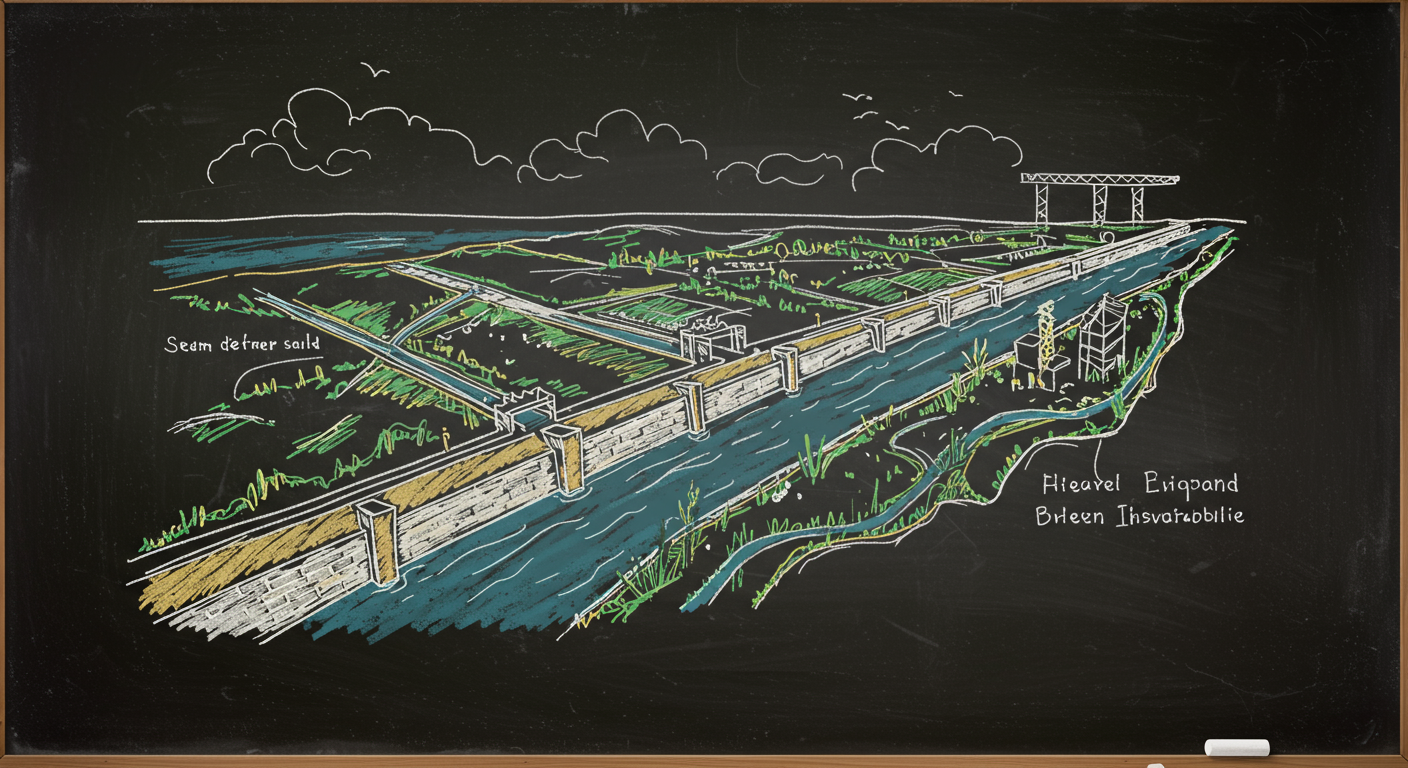
Flood resilience is not one tool. It is a system.
Gray infrastructure
- Seawalls and levees
- Storm-surge barriers
- Pumps and upgraded drainage pipes
- Raised roads, substations, and transit entrances
Green infrastructure
- Wetlands
- Mangroves
- Bioswales
- Permeable pavement
- Restored floodplains
Operational resilience
- Flood warnings
- Evacuation routes
- Backup power for critical facilities
- Building codes that keep water out of basements and electrical rooms
Real-world lesson
Hard barriers can reduce risk from coastal surge.
Nature-based systems can slow runoff and reduce wave energy.
Cities usually need both.
Why flood systems fail
- The storm is larger than the design standard
- Rain falls faster than drains can carry it
- Power fails and pumps stop
- Streets and tunnels become low points that collect water
- New development adds pavement without adding storage
Example numbers
Hurricane Sandy pushed a storm surge of about 14 feet, or 4.3 meters, at Battery Park in Manhattan.
That is why cities now plan for both coastal surge and heavy rainfall, not just one hazard.
Heat resilience starts with physics, not slogans
Why cities overheat
Urban areas trap more heat than nearby rural land because of:
- Dark roofs and roads that absorb sunlight
- Tall buildings that reduce wind flow
- Waste heat from cars, air conditioners, and industry
- Less vegetation and less evaporative cooling
Heat resilience tools
Fast effects
- Cool roofs
- Cool pavements
- Heat alert systems
- Cooling centers
Slower but powerful effects
- Street trees
- Parks
- Green roofs
- Shade structures
- Building retrofits with better insulation and ventilation
A useful rule
If a solution lowers surface temperature but raises electricity use, it is only half a solution.
Cities should track indoor comfort, outdoor temperature, and power demand together.
Nature-based solutions work when they are designed like infrastructure
Nature-based solutions that actually work
Nature-based solutions use ecosystems to reduce climate risk.
Flood and storm protection
- Wetlands store water
- Mangroves reduce wave energy
- Oyster reefs can soften storm surge in shallow coastal waters
- Floodplains give rivers room to spread out
Heat reduction
- Tree canopy shades sidewalks and buildings
- Parks create cooler air pockets
- Green roofs reduce roof temperature
Design rules
- Match the ecosystem to the hazard
- Put it where the water or heat actually is
- Maintain it over time
- Measure performance, not just acreage
Common mistake
Planting is not the same as resilience.
A project only works if it keeps working during extreme weather.
Examples
- Seoul restored the Cheonggyecheon stream in 2005.
- New York has used oyster reef restoration to support shoreline protection.
- Coastal Bangladesh uses mangrove restoration where salinity and sediment conditions allow growth.
What to watch
- Survival rate of plants or reefs
- Water storage volume
- Surface temperature change
- Wave height reduction
- Maintenance cost over time
Cities are using data, sensors, and codes to prepare for extremes
Technologies helping communities prepare
- Rain gauges and river sensors
- Heat and air-quality monitors
- Satellite mapping of land subsidence and flood extent
- Forecast models for storm surge and flash flooding
- Emergency text alert systems
- Digital twins for testing infrastructure under extreme scenarios
How the system works
- Measure risk in real time
- Predict what will happen next
- Trigger a response
- Protect people and critical infrastructure
- Learn from the event and update the plan
Important limit
Technology helps most when it reaches people quickly and clearly.
A perfect forecast is useless if a neighborhood never receives the warning.
Design standards cities use
- Updated flood maps and rainfall intensity curves
- Higher freeboard for critical buildings
- Backup power for hospitals and shelters
- Reflective or green roofs on new construction
- Tree-planting targets tied to hottest neighborhoods
Bottom line
Climate adaptation is the engineering of survival under a changing climate.
The strongest cities combine barriers, shade, water storage, ecosystem restoration, and fast communication.
Keep going with Slate
Pick up where this left off in your own voice session.