1. The habit loop: cue, craving, response, reward
0:006:53
General

Atomic Habits: The Science of Tiny Changes

Habit loops, micro-habits, and environment design — why reading one page beats planning to read 50 books.

Apr 22, 20267 min listen5 chapters
What you'll learn
  • The habit loop: cue, craving, response, reward
  • Why micro-habits outperform ambitious goals
  • Habit stacking and environment design
  • Breaking bad habits by targeting the cue or the reward

1. The habit loop: cue, craving, response, reward

note

Atomic Habits: The Science of Tiny Changes

Habit loops, micro-habits, and environment design — why reading one page beats planning to read 50 books.

note

The habit loop

A habit is a learned sequence that becomes faster with repetition.

Cue: the trigger that starts the behavior. Craving: the desire for the reward. Response: the action itself. Reward: the payoff that teaches the brain to repeat the loop.

The loop matters because the brain is prediction-driven. It learns what to do next from what happened before.

diagram
note

Why the loop is powerful

The reward does two jobs. It satisfies you in the moment, and it teaches the brain that the cue is worth noticing next time.

Example: a phone notification becomes a cue, the urge to know becomes the craving, checking becomes the response, and a message or social update becomes the reward.

The loop is like a path through grass. The first walk is slow. The hundredth walk is easy because the route is already there.

equation
Habit strengthrepetition×reliable reward\text{Habit strength} \propto \text{repetition} \times \text{reliable reward}
note

How to spot your own cue

Look for patterns in the minutes before the habit starts.

Time cues: after lunch, before bed, during the commute. Location cues: kitchen, couch, desk, car. Social cues: certain people, group chats, coworkers. Emotional cues: boredom, stress, loneliness, fatigue.

The fastest way to change a habit is to make the cue visible.

2. Why micro-habits beat ambitious goals

note

Micro-habits vs ambitious goals

A micro-habit is a behavior so small that it lowers the chance of failure.

One page of reading is easier to start than 50 books. One push-up is easier to do than a full workout. Two minutes of writing is easier to repeat than a perfect morning routine.

The point is not that small actions are trivial. The point is that small actions are repeatable.

chart · bar
Start friction by habit size
1 page10 pages30 pages50 books
note

Why small wins matter

A habit grows by accumulation. If you read one page a day, that is about 365 pages in a year. If an average nonfiction book is around 250 pages, that is more than one book finished from a habit that felt almost absurdly small.

Small habits also build self-trust. Each time you keep a tiny promise, your brain gets evidence that you are the kind of person who follows through.

diagram
note

A useful rule

If a habit feels too easy to matter, it is probably the right size for the beginning.

Start with the version you can do on your worst day, not your best day.

3. Habit stacking and environment design

note

Habit stacking

Habit stacking means linking a new behavior to an existing one.

Formula: After I [current habit], I will [new habit].

Examples: After I make coffee, I will read one page. After I sit down at my desk, I will write one sentence. After I take off my shoes, I will put my workout clothes on.

The existing habit acts like a reliable cue.

diagram
note

Environment design

Your environment is a behavior script written in objects.

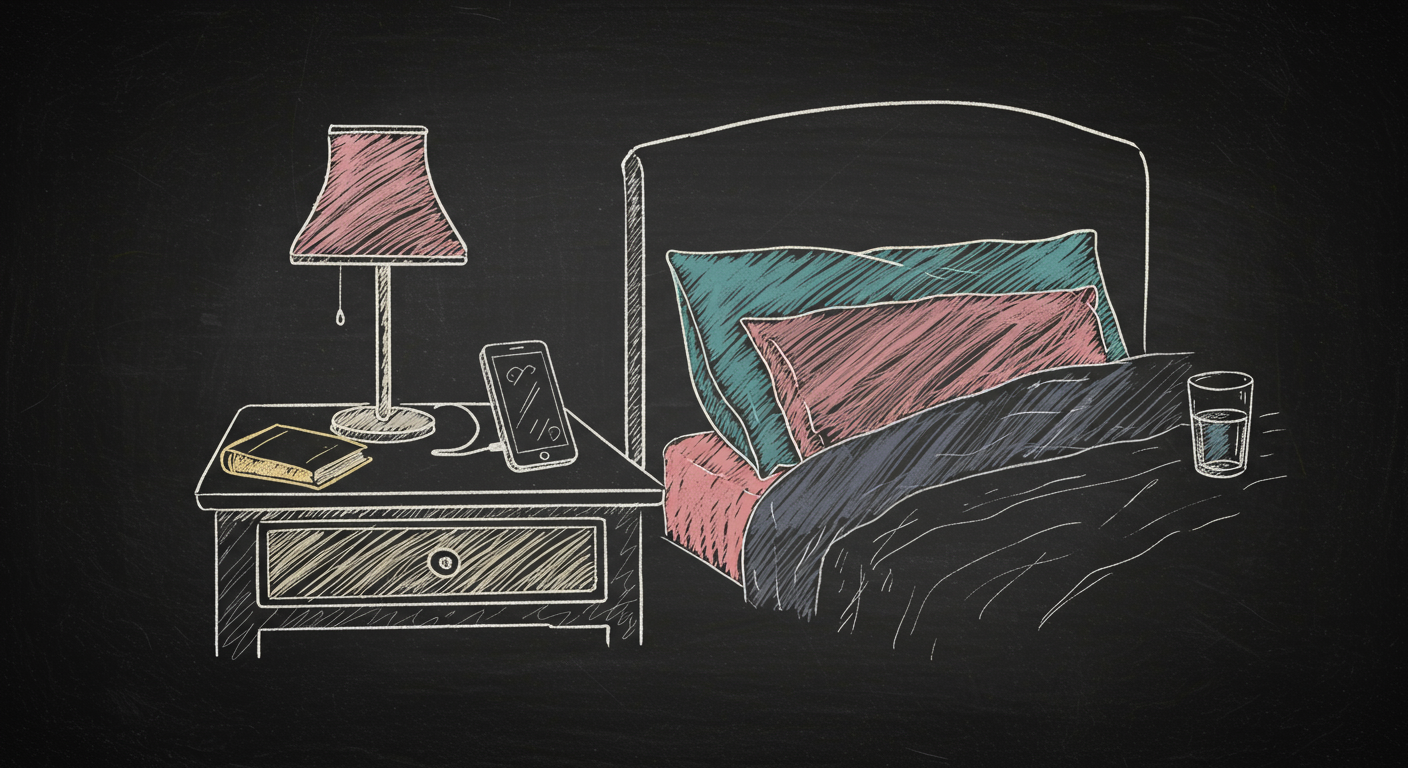
Place the book on the pillow if you want to read at night. Keep fruit on the counter if you want to snack better. Charge the phone outside the bedroom if you want less late-night scrolling.

This is the same logic used in safety design and industrial engineering: make the desired action easy, visible, and fast.
illustration
A bedside table with a book on the pillow, a phone charging across the room, and a water glass next to the bed
note

Friction changes behavior

Add friction to bad habits. Remove friction from good ones.

A gym bag packed the night before lowers resistance. A streaming app logged out on the TV raises resistance.

The goal is not to depend on willpower. It is to let the room do some of the work.

4. Breaking bad habits by changing the cue or the reward

note

Two practical ways to break a bad habit

  1. Target the cue. Reduce exposure to the trigger, change the location, or interrupt the routine.

  2. Target the reward. Identify what the habit is really giving you, then replace it with a healthier payoff.

The strongest strategy is often to do both.

diagram
note

Example: phone checking

Cue: a buzz, a boredom gap, or a pause in work. Reward: novelty, relief, or social connection.

Possible fixes: Turn off nonessential notifications. Keep the phone out of reach during focused work. Use a timer and check messages only at set times.

You are not just removing a behavior. You are redesigning the trigger and the payoff.

equation
New behavior is more likely when cue exposure and reward clarity\text{New behavior is more likely when } \text{cue exposure} \downarrow \text{ and } \text{reward clarity} \uparrow
note

A useful question

What do I get from this habit that I am not getting elsewhere?

That question often reveals the real target. If the answer is relief, build a better relief ritual. If the answer is stimulation, add movement, music, or a brief break.

5. A simple system you can use today

note

A 4-step habit design checklist

  1. Pick one behavior.
  2. Make it tiny enough to start on a bad day.
  3. Attach it to a reliable cue.
  4. Shape the environment so the behavior is easy to repeat.

Track completion, not perfection.

diagram
note

Worked example

Goal: read more.

Bad plan: read 50 books this year. Better plan: read one page after breakfast.

Why it works: The action is easy to start. The cue is stable. The environment can support it if the book stays on the table. The repeated behavior builds identity over time.

chart · line
Consistency beats intensity
Week 1Week 2Week 3Week 4Week 5
note

Final takeaway

Tiny changes work because they fit the way habits are actually learned.

The brain notices cues. It wants rewards. It repeats what is easy and reliable.

Design for that reality, and one page becomes the start of a reading life.

Transcript

Welcome to Slate. Today we're looking at Atomic Habits: The Science of Tiny Changes. We'll cover The habit loop: cue, craving, response, reward, Why micro-habits outperform ambitious goals, Habit stacking and environment design, and Breaking bad habits by targeting the cue or the reward. Let's get into it.

A habit is not a mystery. It is a loop. First comes a cue. Then a craving. Then a response. Then a reward. Here’s the key idea: the brain learns to predict a reward before the reward arrives. That prediction is what makes the loop sticky. In research terms, this is close to the work of B. F. Skinner on reinforcement, and later neuroscience showed how dopamine helps the brain learn what to repeat. Think of the cue as a doorbell. It does not make you open the door. It tells you someone is there. The craving is the urge to see who it is. The response is opening the door. The reward is finding out. Once the brain links those four steps, the behavior becomes faster and more automatic. A classic example is checking your phone. The cue might be a buzz. The craving is relief from uncertainty. The response is unlocking the screen. The reward is new information. That is why habits are often triggered by context, not by willpower. If you want to change a habit, start by identifying the cue. Ask four questions: where are you, what time is it, who is with you, and what happened right before? Those details usually reveal the trigger.

Big goals feel inspiring, but habits are built from actions that are small enough to repeat on a bad day. That is why one page of reading works better than a promise to read 50 books. A goal is an outcome. A habit is a behavior. Outcomes arrive later. Behaviors happen now. If you want the identity of a reader, the winning move is not a heroic weekend plan. It is a tiny action that is almost too easy to refuse. James Clear popularized this idea in Atomic Habits in 2018, but the psychology behind it is older. People repeat behaviors when the cost is low, the reward is quick, and the success rate is high. Small habits also reduce friction. If you read one page, you have a 100 percent chance of starting. If you aim for an hour, you may never begin. Think of it like pushing a car. Getting it moving takes the most effort. Once it rolls, continuing is easier. Micro-habits are the push that gets motion started. And they have a hidden advantage: they protect consistency, which is what turns practice into identity. Missing once is not the problem. Missing for three weeks is. A tiny habit keeps the chain alive.

Habits do not float in space. They attach to moments and places. Habit stacking uses an existing routine as the cue for a new one. After I pour my coffee, I read one page. After I brush my teeth, I floss one tooth. The old habit is the hook. The new habit hangs on it. This works because your brain already knows when the first action happens. You are not inventing a new time from scratch. You are borrowing one. Environment design works the same way, but with space instead of sequence. If healthy food is visible and junk food is hidden, eating changes before motivation does. If the book is on the pillow, reading becomes the default. If the phone is in another room, checking it becomes less automatic. This is not magic. It is friction. People usually choose the easiest available option. Make the good habit easier and the bad habit harder. The room in front of you is quietly training you all day. A desk with a notebook open invites writing. A desk buried under clutter invites avoidance. The best environment is one that makes the right choice the obvious choice.

To break a bad habit, do not start by fighting the whole loop. Start by changing one weak link. The cue is often the easiest place. If you snack while watching TV, the cue may be sitting on the couch after dinner. Change the location, and the habit weakens. If you check your phone whenever a notification arrives, turn off nonessential alerts. Fewer cues mean fewer starts. The reward is the other lever. Bad habits survive because they deliver something the brain wants. Smoking may provide stimulation, a break, or relief from stress. If you remove the cigarette but do not replace the reward, the craving stays alive. So ask: what is the real payoff? Calm? Social connection? A pause? Then find a healthier substitute that delivers the same result. A short walk can replace stress relief. A tea break can replace the ritual. This is why substitution works better than pure suppression. The brain does not like a vacuum. If you erase the reward without replacing it, the loop keeps calling for attention. Change the cue, change the reward, or both. That is how you weaken a habit without trying to fight every repetition head-on.

Here is the whole method in practice. Choose one habit. Make it tiny. Attach it to an existing routine. Place the environment on your side. Then track whether you did the action, not whether you felt motivated. That shift matters. Motivation changes hour by hour. Systems stay in place. If you want to read more, do not start with 50 books. Start with one page after breakfast, with the book already on the table. If you want to exercise, start with one minute of stretching after brushing your teeth, with shoes by the door. If you want to stop doomscrolling, move the phone away from the bed and set one check-in window. The point is not perfection. The point is repeated contact with the behavior you want. Habits are the compound interest of self-change. Small actions, repeated often, become large results over time. Not because each action is huge, but because the system keeps making the next action easier. That is the real science of tiny changes: lower the friction, raise the visibility, and let repetition do the heavy lifting.

XLinkedInWhatsApp

Keep going with Slate

Pick up where this left off in your own voice session.

Built with Slate